



.svg)

.svg)
Contents
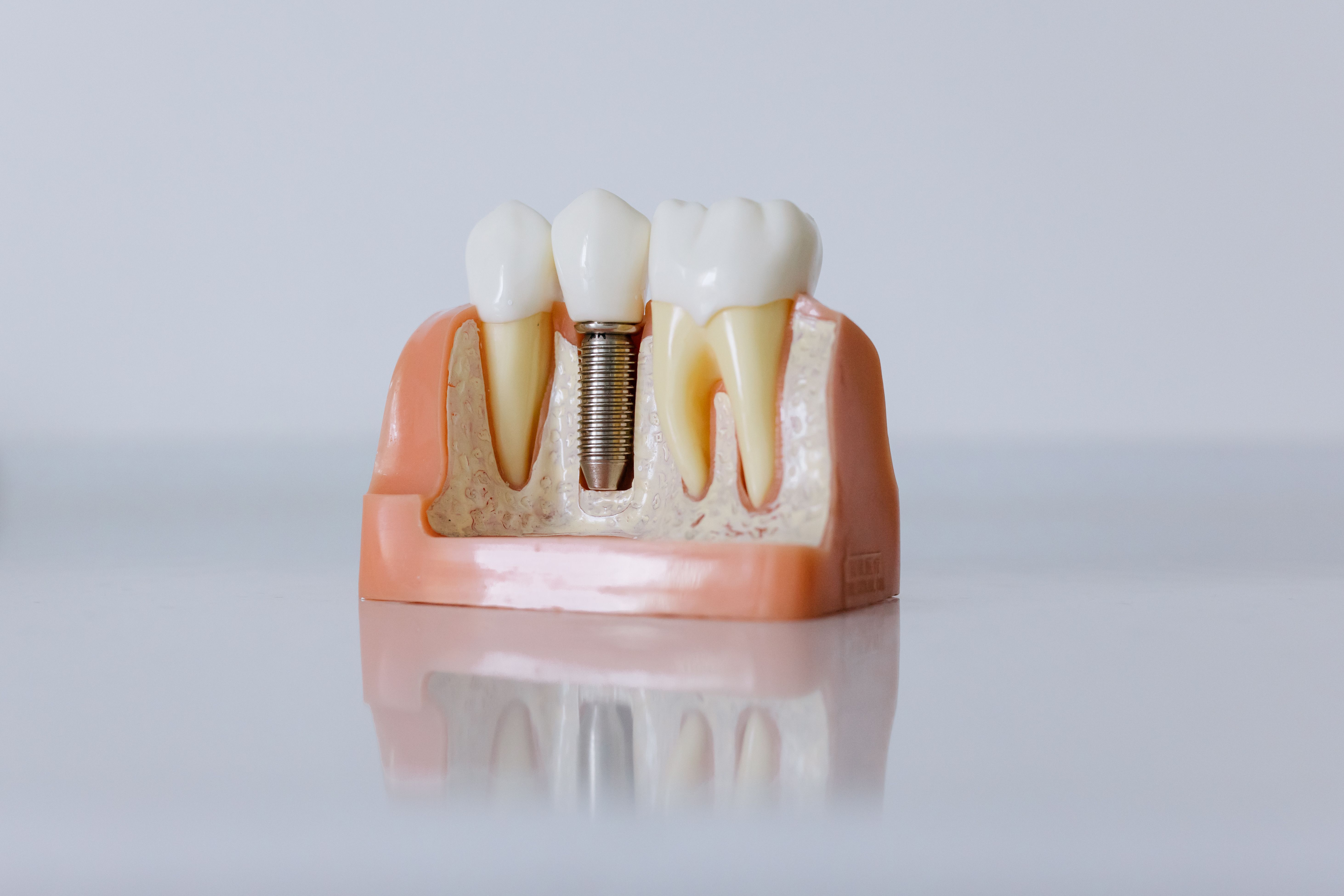
Affording dental implants is rarely a single decision about one large number. It is a series of smaller decisions about sequencing, insurance mechanics, and which sources of help you have not checked yet. Patients who end up treated are usually not the ones with the most money. They are the ones who asked the cost question early and out loud.
Cost is a genuine barrier, and it is worth saying plainly that you are not unusual for hesitating. Federal survey data shows that among adults aged 65 and older, 35.3% of those living below the poverty line had a dental visit in the past year, compared with 80.5% of those at four times the poverty level or above. Income predicts dental care more strongly than almost anything else.
This article is about the money, not the clinical decision. If you are still weighing whether implants are the right choice compared with other options, see our dental implants page first, then come back to this.
Separate the Price From the Payment Plan
The first thing to untangle is that the total fee and what you pay each month are two different problems. A number that looks impossible as a lump sum may be manageable across eighteen or twenty-four months. Many patients decline before ever finding out which one they were actually facing.
Ask the office to tell you both: the full treatment fee, and what payment arrangements exist. If nobody has shown you a monthly figure, you have not yet seen the real decision.
Ask for an Itemized Treatment Plan in Writing
An implant is not one procedure with one fee. Depending on your situation it may involve extraction, bone grafting, the implant fixture, a healing period, an abutment, and the final crown. Sometimes a sinus lift. Each of those carries its own code and its own fee.
An itemized plan lets you see which parts are clinically unavoidable, which are optional, and which could be deferred. It also gives your insurance something specific to respond to.
Ask Your Insurance for a Predetermination
A predetermination, sometimes called a pre-treatment estimate, is when the office submits the proposed treatment to your plan before you commit, and the plan responds with what it expects to pay. It is not a guarantee of payment, but it turns guesswork into a document.
This is one of the most underused tools in dentistry. It costs you nothing except a few weeks of waiting, and it frequently changes what patients decide to do.
Understand What Dental Insurance Realistically Contributes
Most dental plans carry an annual maximum, which is a ceiling on what the plan will pay in a benefit year regardless of what your treatment costs. For implant-level treatment, it is common to hit that ceiling and still have a substantial balance.
Plans may also exclude teeth that were already missing before you enrolled, and some will pay only toward a less expensive alternative treatment rather than the implant itself. None of that means insurance is useless. It means you should find out the specific numbers rather than assuming either the best or the worst.
Use the Benefit Year to Your Advantage
If your treatment naturally spans a healing period of several months, there may be an opportunity to have part of it fall in one benefit year and part in the next, giving you two annual maximums instead of one. This only works when it is clinically appropriate, and the timing has to be driven by healing rather than by the calendar.
Raise it with the office early. It cannot be arranged retroactively.
Consider Phasing the Treatment
Not every missing tooth has to be addressed at once. When several teeth are involved, treatment can often be staged so the most functionally important areas are handled first, with the rest following as finances allow.
Phasing is not a compromise on quality. It is a way of keeping a long plan moving instead of stalling it entirely.
Ask About In-House Payment Arrangements
Some practices offer their own payment arrangements or membership plans for patients without insurance. Terms vary a great deal between offices, so ask specifically what is available rather than assuming. Our financial assistance page outlines what we offer.
Third-Party Financing: Read the Promotional Terms Carefully
Healthcare credit products are common in dentistry and can work well, but the promotional terms deserve real attention. Some deferred-interest arrangements charge interest retroactively from the original date if the balance is not cleared within the promotional window.
Read what happens at the end of the promotional period before you sign, not after. We are a dental office, not financial advisors, and the right answer here depends on your own circumstances.
Check Whether You Have HSA or FSA Dollars
If you have a health savings account or flexible spending account, dental treatment is generally an eligible expense. FSA funds in particular often operate on a use-it-or-lose-it basis within the plan year, which can make timing matter.
Check your balance and your plan year before you schedule. Patients forget this more often than you would expect.
Dental School Teaching Clinics
Teaching clinics are a legitimate option that many patients do not know exists. The National Institute of Dental and Craniofacial Research notes that dental schools often run clinics where students treat patients under faculty supervision at reduced cost.
The trade-off is time. Appointments are longer and treatment typically takes more visits, because everything is checked by supervising faculty. If your schedule can absorb that, the savings are real.
Community Health Centers and Income-Based Fees
Federally funded community health centers provide dental care on a scale based on what you can afford, and the same NIDCR guidance points to them alongside state and local health departments, Medicaid and CHIP, the 2-1-1 helpline, and clinical trials that sometimes provide treatment at reduced or no cost.
Availability of implant treatment specifically will vary by center, so call and ask what is offered rather than assuming it is only basic care.
Medicare, Medicaid, and What They Actually Cover
This is where expectations most often go wrong. Medicare states plainly that it does not cover dental services such as routine cleanings, fillings, extractions, or items like dentures and implants. The exceptions are narrow and hospital-related, such as dental treatment required before a transplant, cardiac valve replacement, or certain cancer treatment.
Medicaid adult dental coverage is set state by state and varies widely. Some Medicare Advantage plans include dental benefits, but those typically carry their own annual dollar caps. Check your specific plan rather than relying on what a friend's plan covered.
Weigh It Against the Cost of Waiting
Declining treatment is also a financial decision, it just does not arrive with a quote attached. A missing tooth can allow neighbouring teeth to drift and the opposing tooth to over-erupt, and the bone that once supported the tooth tends to resorb over time. Bone loss can turn a straightforward implant case into one that needs grafting first.
This is not a reason to rush. It is a reason to find out your actual numbers now rather than revisiting the question in three years with a more complicated starting point.
Questions Worth Asking Before You Commit
- What is the total fee, itemized by stage?
- What will my plan pay, based on a predetermination rather than an estimate?
- Is any part of this clinically able to wait, and what is the risk if it does?
- What payment arrangements does this office offer?
- Would a bridge, a partial denture, or implant-supported dentures meet my needs at a different price point?
- What happens to the cost if I wait a year?
The Cost Conversation Is Worth Having Out Loud
Most patients who cannot afford implants at the quoted price have not exhausted their options. They have simply had one conversation, heard one number, and stopped. Between insurance mechanics, phasing, benefit-year timing, payment arrangements, teaching clinics, and income-based care, there are usually several routes that were never examined.
If cost is what is holding you back, say so directly when you request an appointment. It is a normal thing to discuss, and it is far more useful to us than a patient who quietly decides not to return.
References
- National Institute of Dental and Craniofacial Research. Finding Dental Care. National Institutes of Health.
- Centers for Medicare & Medicaid Services. Dental Service Coverage. Medicare.gov.
- Centers for Disease Control and Prevention, National Center for Health Statistics. Dental Care Among Adults Age 65 and Older: United States, 2022. NCHS Data Brief No. 500, 2024.
People Ask
 Dr. Roy Burkhalter, DDS


.svg)