



.svg)
.svg)
Wisdom Teeth Removal in Harlan, Iowa
Whether your wisdom teeth are already causing problems or a recent X-ray showed they need to come out, our team removes third molars for teens and adults with sedation options that make the experience manageable.

.svg)
.webp)
Wisdom Teeth Removal at Markham Family Dental Associates
Most patients come to us in one of two situations. Either they are already in pain and need to be seen soon, or they were told at a routine exam that their wisdom teeth are going to cause problems and they want to understand whether that is actually true. Both are valid starting points. Our team looks at the X-rays, tells you what we see, and gives you an honest recommendation before scheduling anything.
We remove wisdom teeth for teenagers and adults, with sedation options ranging from nitrous oxide to IV sedation for patients who want to be fully relaxed during the procedure. We see patients from Harlan and across Shelby County including Avoca, Atlantic, Minden, and Shelby, as well as patients who travel from surrounding communities such as Omaha, Glen Oaks, West Des Moines, Clive, Jacksonville, Lincoln, and Sioux Falls. Same-week appointments are available for patients with wisdom tooth pain

What Are Wisdom Teeth?
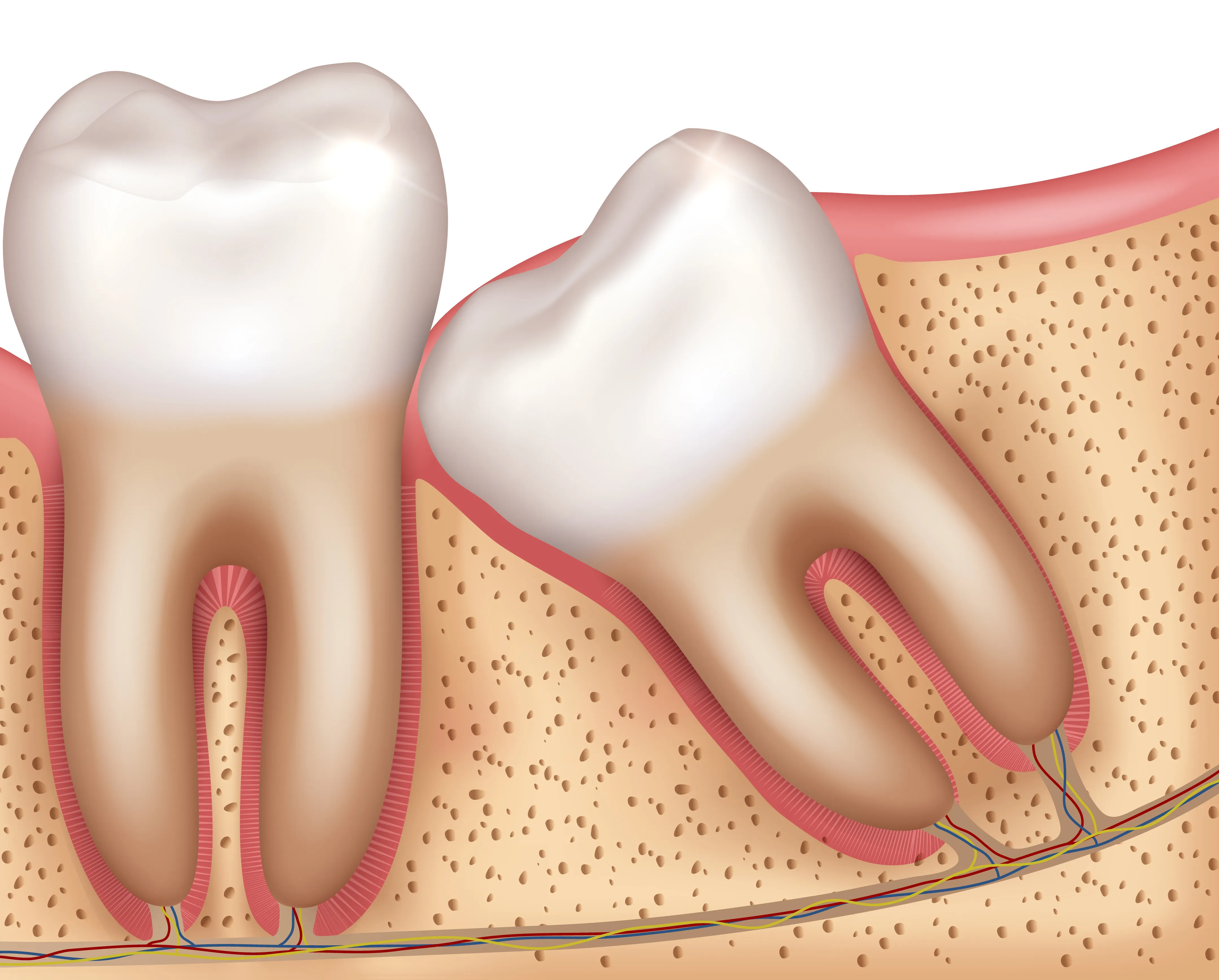
Wisdom teeth are the third set of molars that develop at the back of each side of the jaw, typically erupting between the ages of 17 and 25. Most adults have four, one in each corner of the mouth, though some people have fewer and a small percentage never develop them at all.
Modern human jaws are generally too small to accommodate wisdom teeth comfortably alongside the existing teeth. When there is not enough space, wisdom teeth become impacted, meaning they cannot fully erupt, or they erupt at angles that create problems for neighboring teeth. This is why removal is often recommended even before symptoms develop.

Signs Your Wisdom Teeth Need to Come Out
These are the clinical and symptomatic indicators our team uses when evaluating whether removal is the right call.

Pain or Pressure at the Back of Your Jaw
Discomfort at the back of the mouth, particularly when biting, is often the first sign wisdom teeth are creating problems. The pain may come and go, which does not mean the issue has resolved.
Swollen, Tender, or Bleeding Gum Behind Your Last Molar
When a wisdom tooth partially erupts, it creates an opening in the gum that is nearly impossible to clean. Bacteria accumulate there, leading to a condition called pericoronitis, which causes the surrounding gum to swell, bleed, and become infected repeatedly.
A Wisdom Tooth Growing Sideways on Your X-ray
An angled or horizontal wisdom tooth may not hurt yet, but it can press against the root of the second molar. Left in place, it may damage the tooth in front of it over time. This is one reason our team may recommend removal before symptoms develop.
Repeated Infections in the Same Area
A wisdom tooth that has caused an infection in the surrounding gum may be more likely to cause repeated problems, especially if the area is difficult to clean. Removal can help stop the recurring cycle when the tooth is the source of the issue.
A Cyst Developing Around the Tooth
Impacted wisdom teeth can develop a fluid-filled sac called a dentigerous cyst. Cysts damage the surrounding bone and adjacent teeth as they grow and require treatment beyond simple extraction. Catching them early on X-rays before they cause significant bone loss is one of the reasons regular dental exams matter.
Crowding of the Front Teeth
There is genuine debate in dentistry about whether wisdom teeth cause front tooth crowding. What matters clinically is whether a wisdom tooth is angled, impacted, or pressing against the tooth in front of it. If you have had orthodontic treatment and want to protect that result, the timing of wisdom tooth removal is worth discussing with our team.
.webp)
Does Wisdom Teeth Removal Hurt?
The procedure itself, performed under adequate anesthesia, should not be painful. The area is fully numbed before any work begins, and sedation options are available for patients who want to be relaxed or unaware during the extraction. Most patients who choose IV sedation report little to no memory of the procedure. The discomfort comes in the days after, during healing, and that is entirely manageable with medication and the right recovery steps.
The extraction site is numbed before any instruments are used
Nitrous oxide, oral sedation, and IV sedation are all available depending on your preference
Post-operative soreness typically peaks at day two or three and improves steadily from there
Most patients manage comfortably with ibuprofen and acetaminophen
Prescription pain medication is provided when the case warrants it
What Wisdom Teeth Removal Prevents
Wisdom teeth that are left in place when they should come out do not stay harmless. Here is what removal protects you from.
Infection That Keeps Coming Back
A partially erupted wisdom tooth creates a pocket where bacteria can collect. Antibiotics may treat the acute infection, but they do not correct the gum pocket or tooth position. Removal addresses the source when the wisdom tooth is causing repeated infection.
Root Damage to the Tooth in Front
An angled wisdom tooth can press against the second molar and damage the neighboring tooth over time. Root damage to the second molar is one of the more serious risks of delaying removal when an impacted wisdom tooth is positioned against it.
Bone Loss From a Cyst
Dentigerous cysts can develop around impacted wisdom teeth and may damage surrounding bone as they expand. X-rays help detect these problems early so they can be treated before more significant damage occurs.
An Emergency Extraction Under Worse Conditions
An elective extraction on a planned schedule is often easier to manage than an urgent extraction when the area is acutely infected or inflamed. When removal is clearly recommended, addressing wisdom teeth earlier may reduce the risk of a more complicated situation later.
What Happens on the Day of Removal
1
Consultation and X-rays
Our team takes a panoramic X-ray that shows all four wisdom teeth in relation to the neighboring roots, the nerve that runs through the lower jaw, and the sinus cavity above the upper wisdom teeth. We review what we see with you and confirm the treatment plan before scheduling the extraction.
2
Anesthesia and Sedation
The extraction sites are numbed with local anesthetic. If you have chosen nitrous oxide, oral sedation, or IV sedation, that is administered first. We wait until you are comfortable and fully numb before starting.
3
Extraction
Fully erupted wisdom teeth are removed similarly to any molar. Impacted wisdom teeth require a small incision in the gum and, in some cases, removal of a small amount of bone to free the tooth. The socket is cleaned and stitches are placed when needed. The appointment length depends on how many teeth are being removed and how impacted they are.
4
Recovery Instructions and Medications
Before you leave, our team provides written aftercare instructions, gauze to manage initial bleeding, and any prescriptions for pain medication or antibiotics when clinically appropriate. A driver is required if you have had IV or oral sedation. Your recovery timeline and what to watch for are reviewed with you before you go.
5
Follow-Up and Healing Check
Most patients heal without needing a separate follow-up visit, but our team will let you know if a healing check is recommended based on your case. Call us if pain worsens after the first few days, swelling increases, bleeding does not slow, or you notice fever, pus, or a bad taste that does not improve.
.webp)
What to Expect During Wisdom Teeth Recovery
Most patients are back to normal within five to seven days for simple extractions, and seven to ten days for surgical removal of deeply impacted teeth. The first three days are the most uncomfortable. Swelling peaks around day two or three and then steadily decreases. Knowing what is normal versus what warrants a call to our office makes the recovery much less stressful.
Days 1 to 2: rest, ice packs on the jaw, soft foods only, keep gauze changed as instructed
Days 2 to 3: swelling is at its peak, pain is manageable with medication
Days 4 to 7: swelling and discomfort decrease noticeably, soft foods continue
Avoid straws, smoking, and spitting for at least 72 hours to protect the blood clot
Call us if you develop worsening pain after day three, fever, or visible pus, as these may indicate dry socket or infection
Words From Our Patients
Frequently Asked Questions
BOOK APPOINTMENTWhere can I get my wisdom teeth removed in Harlan, Iowa?
How much does wisdom teeth removal cost in Iowa?
How long does wisdom teeth removal recovery take?
What can I eat after wisdom teeth removal?
Does wisdom teeth removal hurt?
Can I be put to sleep for wisdom teeth removal?
Prepare for Your Visit
Patient Forms
Download and complete your forms before your appointment to save time when you arrive. Plan to come in 10 to 15 minutes early so we can get you settled.
Learn More

Insurance and Financing
We work with many PPO dental insurance plans and can file claims on your behalf when insurance applies. Financing options may be available for patients who need flexible payment options. Ask our front desk what works best for your situation.
Learn More
Contact Us
Start the Conversation
Address
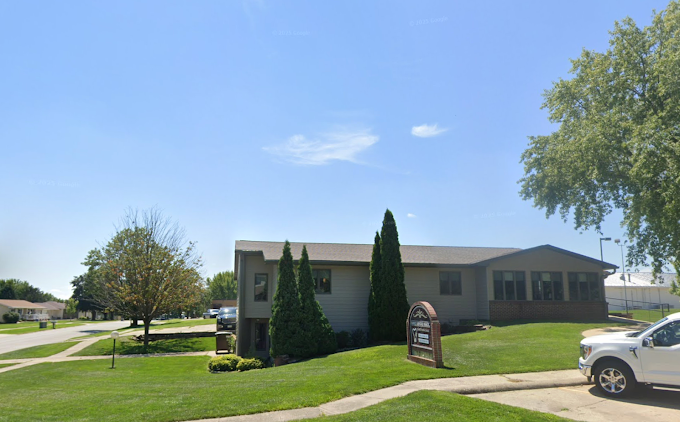
2105 Pine St
Harlan, IA 51537, US
Harlan, IA 51537, US
Hours
Mon - Tue: 8:00am - 5:00pm
Wed: 7:00am - 2:00pm
Thu: 8:00am - 5:00pm
Fri: 7:00am - 12:00pm
Sat - Sun: Closed

(712) 755-5342

.svg)