



.svg)
.svg)
Root Canal Treatment in Harlan, Iowa
If you are in tooth pain or were told that a tooth is infected, it is important to have it evaluated promptly. Our team in Harlan provides root canal treatment to help relieve pain, treat infection, and save the natural tooth when possible.

.svg)
Root Canal Treatment at Markham Family Dental Associates
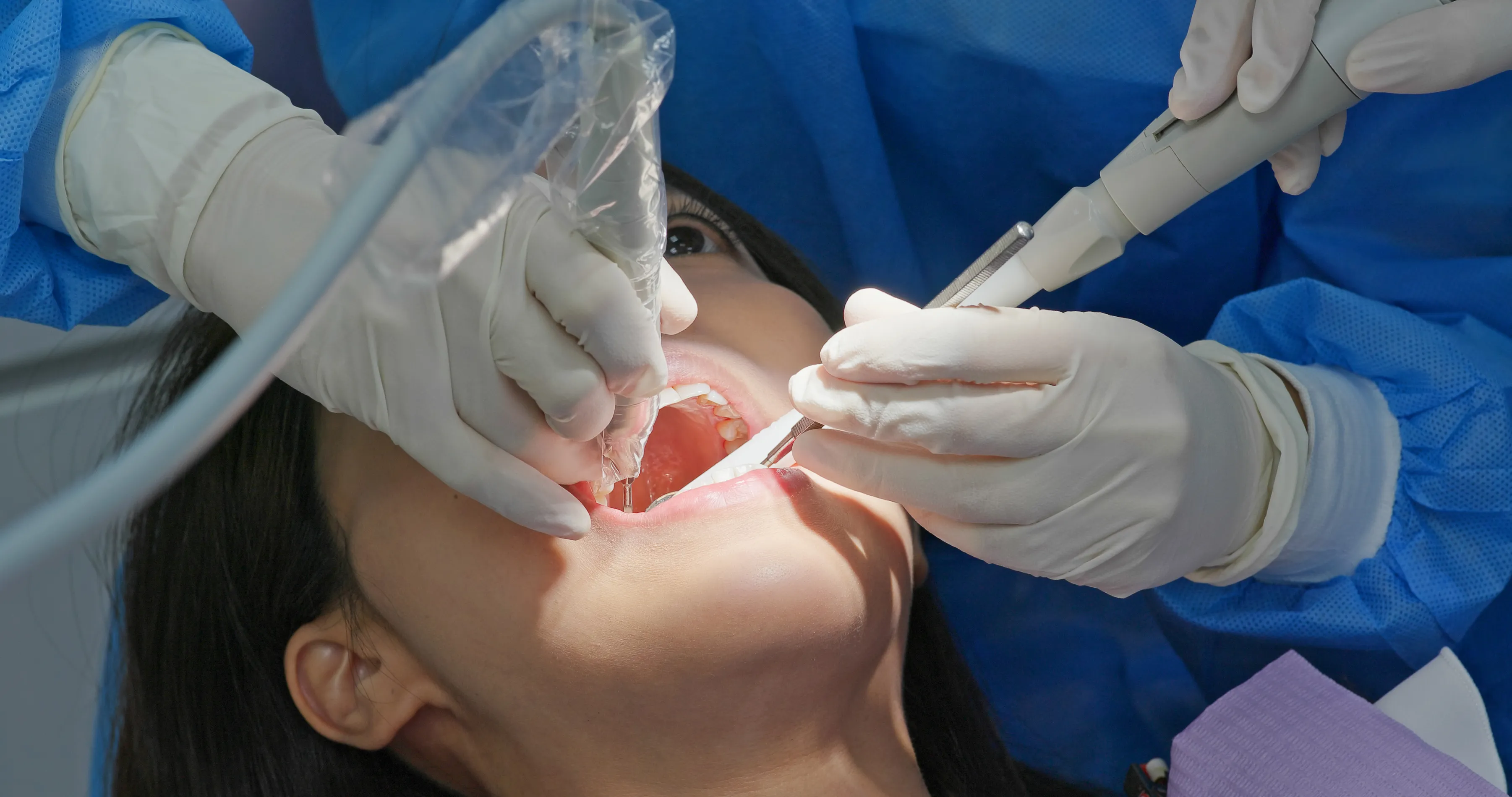
Root canals have a reputation shaped by older dentistry, but modern treatment is usually much more comfortable than patients expect. With current anesthetics and techniques, most patients feel pressure rather than pain during the procedure. The goal is to remove the infected tissue, relieve the source of pain, and help save the tooth.
An infected or inflamed tooth nerve usually will not resolve on its own, and antibiotics alone do not remove the source of infection inside the tooth. Without treatment, the infection can worsen, affect the surrounding bone, and may eventually lead to tooth loss. Root canal treatment removes the infected tissue, seals the tooth, and helps preserve the natural tooth when it can still be restored. We see patients from across Shelby County and encourage patients with severe tooth pain to call as soon as possible.

What Is a Root Canal?
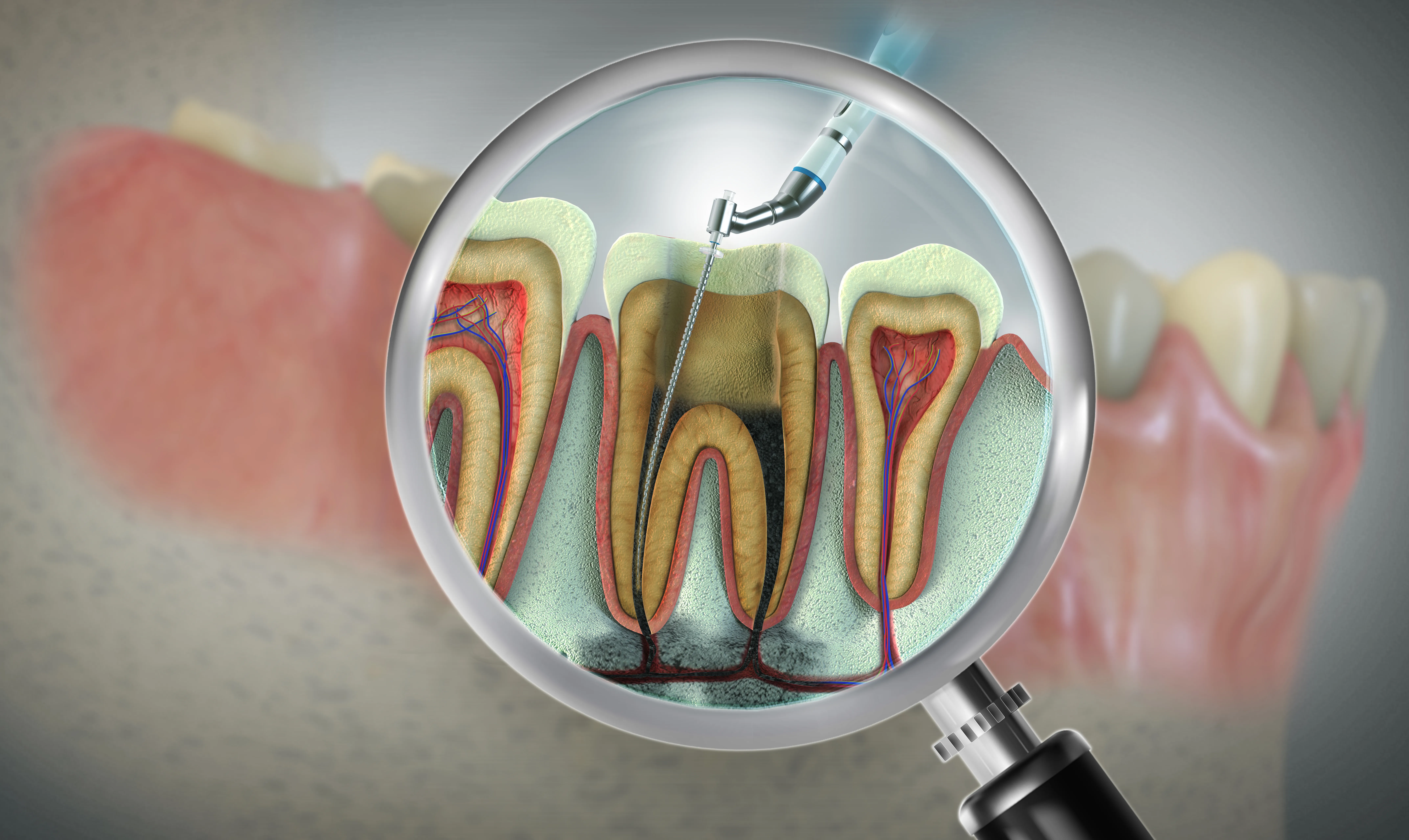
Inside every tooth, beneath the enamel and dentin, is a chamber containing the dental pulp: the nerve, blood vessels, and connective tissue that supported the tooth’s development. When bacteria reach this chamber through deep decay, a crack, or a fracture, the pulp can become infected or inflamed. If it is not treated, the infection may spread into the bone surrounding the root.
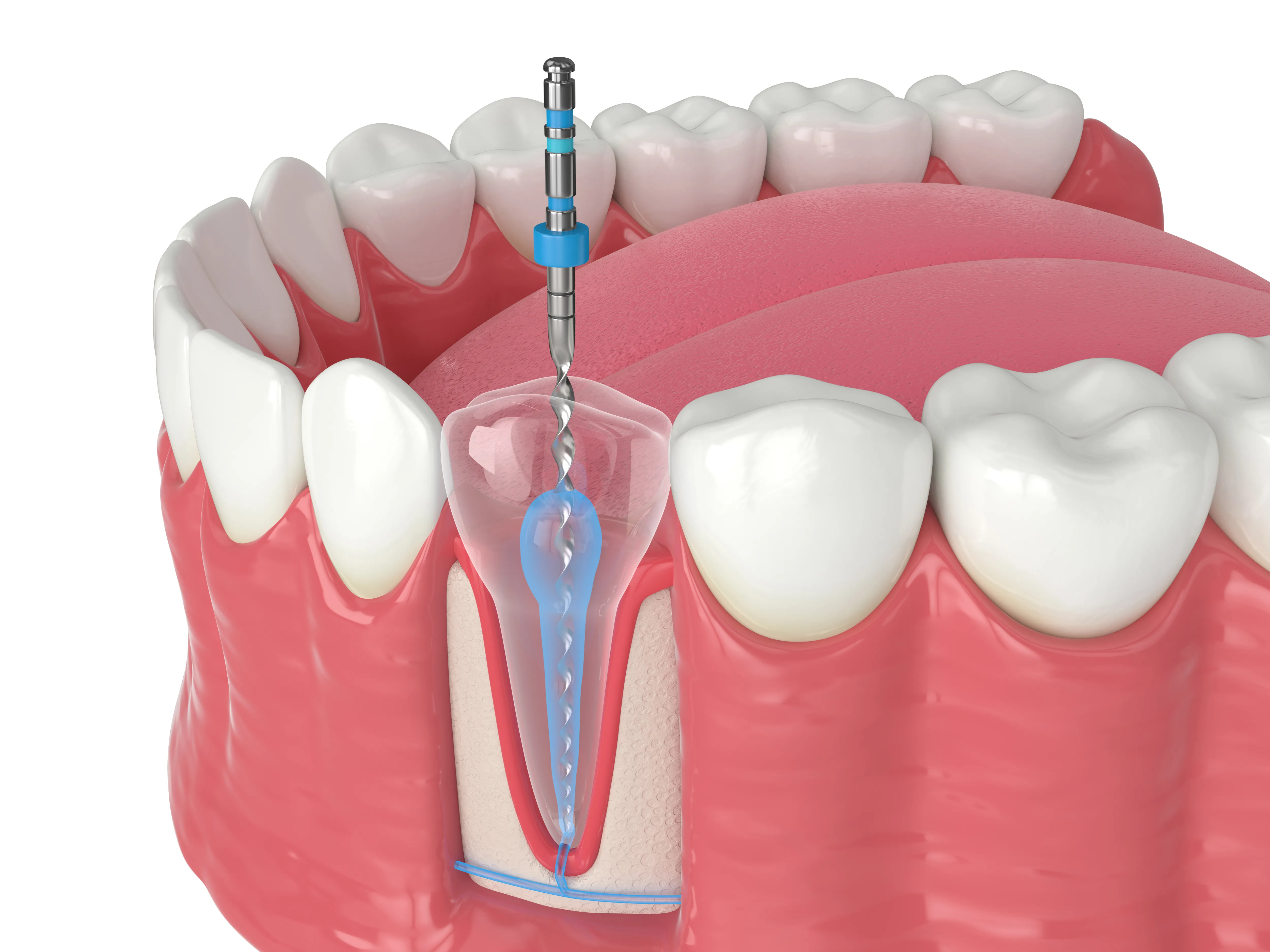
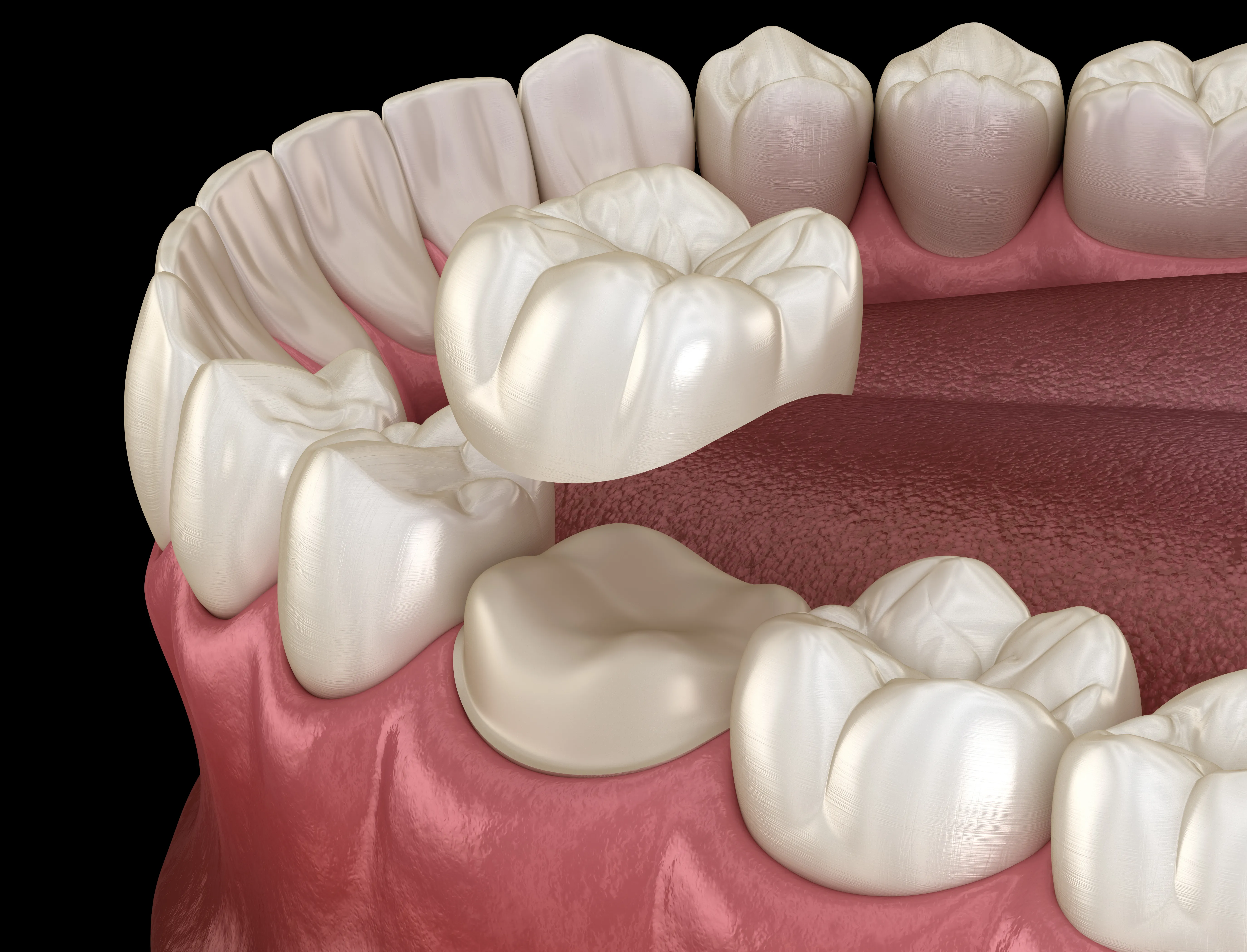
Root canal treatment removes the infected or inflamed pulp, cleans and shapes the canals inside the root, and seals the tooth with a filling material. The tooth remains in place with its root structure intact. Because root-treated teeth can become more vulnerable to fracture, many back teeth need a crown afterward to protect the remaining structure.
Signs You May Need a Root Canal
Some of these symptoms can have other causes, so the only way to know for certain is an exam and current X-rays. These signs may suggest that the pulp inside the tooth is inflamed, infected, or no longer healthy.

Severe or Throbbing Tooth Pain
Pain that is intense, constant, or keeps you awake at night is different from typical tooth sensitivity. When a nerve is infected or inflamed, the pain may feel pressure-like and can be difficult to localize. Pain that worsens when you lie down may be a sign that the pulp inside the tooth is involved.
Prolonged Sensitivity to Heat or Cold
Brief sensitivity to cold that passes quickly is often less concerning than sensitivity that lingers. If pain lasts after the cold or heat is removed, especially with heat, it may suggest deeper inflammation inside the tooth. An exam and X-rays can confirm whether root canal treatment is needed.
A Pimple on Your Gum
A small bump on the gum near a tooth, sometimes called a fistula or sinus tract, may be a drainage pathway from an infection around the root. It can appear and disappear, but that does not necessarily mean the problem is gone. The tooth should be evaluated so our team can determine whether an infection is still present.
A Tooth That Has Darkened
A tooth that has turned gray, brown, or noticeably darker than neighboring teeth may have experienced nerve damage, especially after trauma. This can happen even years after an injury. An exam and X-rays can help determine whether the pulp is still healthy or whether treatment is needed.
Pain When You Bite or Press on the Tooth
Pain when biting down on a tooth or pressing on the surrounding gum may suggest inflammation or infection around the root. It can also have other causes, such as a cracked tooth or high bite. A tooth that is painful to touch or painful when chewing should be evaluated promptly.
Root Canal or Extraction: Which Is the Right Choice?
For many patients with an infected tooth, this is the real decision. Here is how the two options compare.
| Root Canal | Extraction | |
|---|---|---|
| The tooth | Stays in place with its root intact | Removed entirely |
| What happens next | A crown is placed over the treated tooth | The gap must eventually be replaced with an implant, bridge, or partial denture |
| Effect on neighboring teeth | None | Gap causes neighboring teeth to drift; opposing tooth over-erupts |
| Bone | Root preserves bone at that site | Bone at the extraction site begins to shrink within months |
| Timeline | One to two appointments; done | Extraction heals in weeks; replacement takes months to years |
Extraction is sometimes the right answer, particularly when the tooth is not restorable or the patient cannot afford a crown. Our team is honest about when saving the tooth makes sense and when it does not.
Does a Root Canal Hurt?
The short answer is no, not the procedure itself. Root canals have a reputation built on how they were done decades ago. Modern anesthetics are far more effective, and the procedure is routinely completed with patients who feel nothing beyond pressure. What actually hurts is the infection beforehand, not the treatment.
The tooth is fully numbed before any instruments are used
Most patients feel pressure and vibration, not pain
Severely infected teeth can be harder to numb; antibiotics are prescribed first when needed
Tenderness for two to four days after is normal, managed with over-the-counter pain relief
The infection-driven pain that brought you in is typically gone the same day
What Root Canal Treatment Saves You From
Delaying treatment does not make the infection pause. It makes the options narrower.
Escalating, Unbearable Pain
An infected tooth does not plateau. The pain from pulp infection worsens as pressure builds inside the closed space of the root. Root canal treatment eliminates the source of that pressure immediately. Patients often report that the tooth feels dramatically better within 24 hours of treatment.
Spreading Infection
A dental abscess is a bacterial infection in bone and soft tissue. Left untreated, it can spread to the jaw, neck, and in rare but documented cases, to the airway and bloodstream. A dental infection that has reached the point of facial swelling or difficulty swallowing is a medical emergency. Root canal treatment or extraction stops the infection before it reaches that stage.
Losing the Tooth
Once a tooth is extracted, the space it leaves creates a cascade: neighboring teeth drift, the opposing tooth over-erupts, and the bone at the site shrinks. Replacing a lost tooth costs significantly more in time and money than saving the original one. A root canal preserves the natural tooth and everything that comes with it.
A More Complicated Future
Every month an infected tooth goes untreated, more bone is lost around the root. Bone loss complicates the crown placement that follows root canal treatment, and in advanced cases, may make the tooth unsavable even with root canal treatment. Treating the infection early keeps the options open.
What Happens During Root Canal Treatment
1
Exam, X-rays, and Diagnosis
Our team takes current X-rays to assess the tooth, the shape of the root canals, and whether the surrounding bone is affected. We confirm whether root canal treatment is the appropriate option and explain what the appointment will involve. If there is significant swelling or acute infection, antibiotics may be prescribed when clinically appropriate.
2
Anesthesia
The tooth and surrounding tissue are numbed with local anesthetic. We wait until the area is fully numb before starting. If you have had difficulty getting numb at previous dental appointments, let us know in advance. Additional anesthetic techniques may be available.
3
Cleaning the Canals
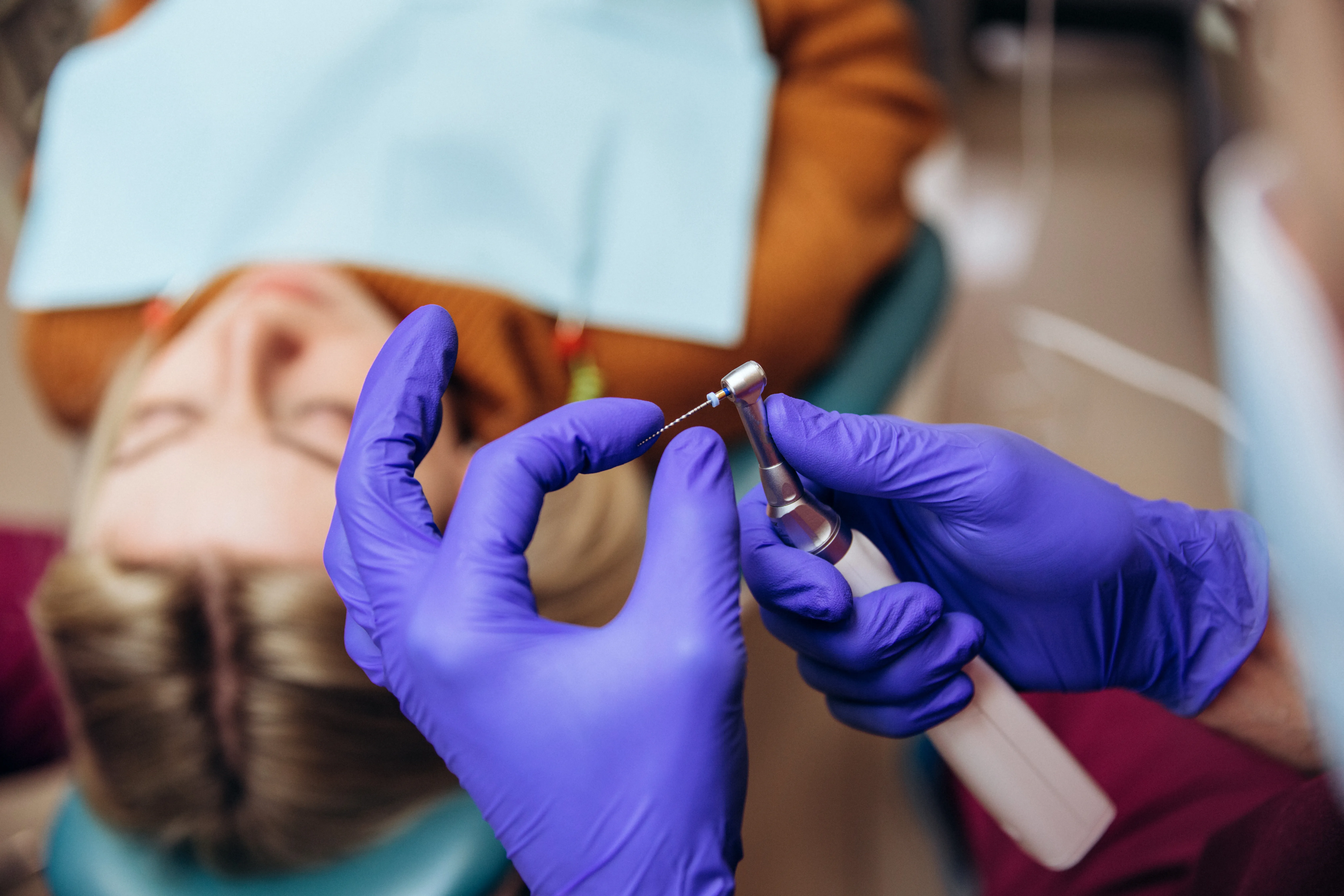
A small opening is made through the top of the tooth to access the pulp chamber. The infected pulp is removed and each root canal is cleaned, shaped, and disinfected with a combination of instruments and irrigating solutions. The number of canals varies by tooth: front teeth typically have one, molars have three or four.
4
Sealing the Tooth
Once the canals are clean and dry, they are filled with a biocompatible material called gutta-percha and sealed. A temporary or permanent filling is placed over the access opening. The tooth is structurally intact and the infection is eliminated.
5
Crown Placement
For back teeth, a crown is placed at a separate appointment after the root canal is complete. The crown protects the treated tooth from fracture. Front teeth sometimes require only a tooth-colored filling or a veneer, depending on the amount of remaining structure. Our team discusses the appropriate restoration at the treatment planning visit.
Do You Need a Crown After a Root Canal?
For back teeth, a crown is often recommended after root canal treatment. A root-treated molar or premolar can become more vulnerable to fracture over time because it has lost internal tooth structure and still absorbs heavy chewing forces. The crown helps protect the treated tooth and reduce the risk of future cracking.
Back teeth need a crown in nearly all cases
Front teeth may only need a filling if enough structure remains
A darkened front tooth may benefit from a veneer for cosmetic reasons
The crown is placed at a separate appointment, a few weeks after the root canal
Skipping the crown is the most common reason a root canal ultimately fails
Words From Our Patients
Do I need a crown after a root canal?
How much does a root canal cost in Iowa without insurance?
Can I get a same-day root canal in Harlan?
Can I be sedated for a root canal?
Will antibiotics clear up a tooth infection without a root canal?
How long does a root canal take?
Is it better to do a root canal or just pull the tooth?
Prepare for Your Visit
Patient Forms
Download and complete your forms before your appointment to save time when you arrive. Plan to come in 10 to 15 minutes early so we can get you settled.
Learn More

Insurance and Financing
We work with many PPO dental insurance plans and can file claims on your behalf when insurance applies. Financing options may be available for patients who need flexible payment options. Ask our front desk what works best for your situation.
Learn More
Contact Us
Start the Conversation
Address
2105 Pine St
Harlan, IA 51537, US
Harlan, IA 51537, US
Hours
Mon - Tue: 8:00am - 5:00pm
Wed: 7:00am - 2:00pm
Thu: 8:00am - 5:00pm
Fri: 7:00am - 12:00pm
Sat - Sun: Closed

(712) 755-5342

.svg)