



.svg)
.svg)
Tooth Extractions in Harlan, Iowa
When a tooth cannot be saved, removing it may be the right call. Our team extracts broken, infected, and damaged teeth with sedation options available, and we prioritize patients who are in pain.

.svg)
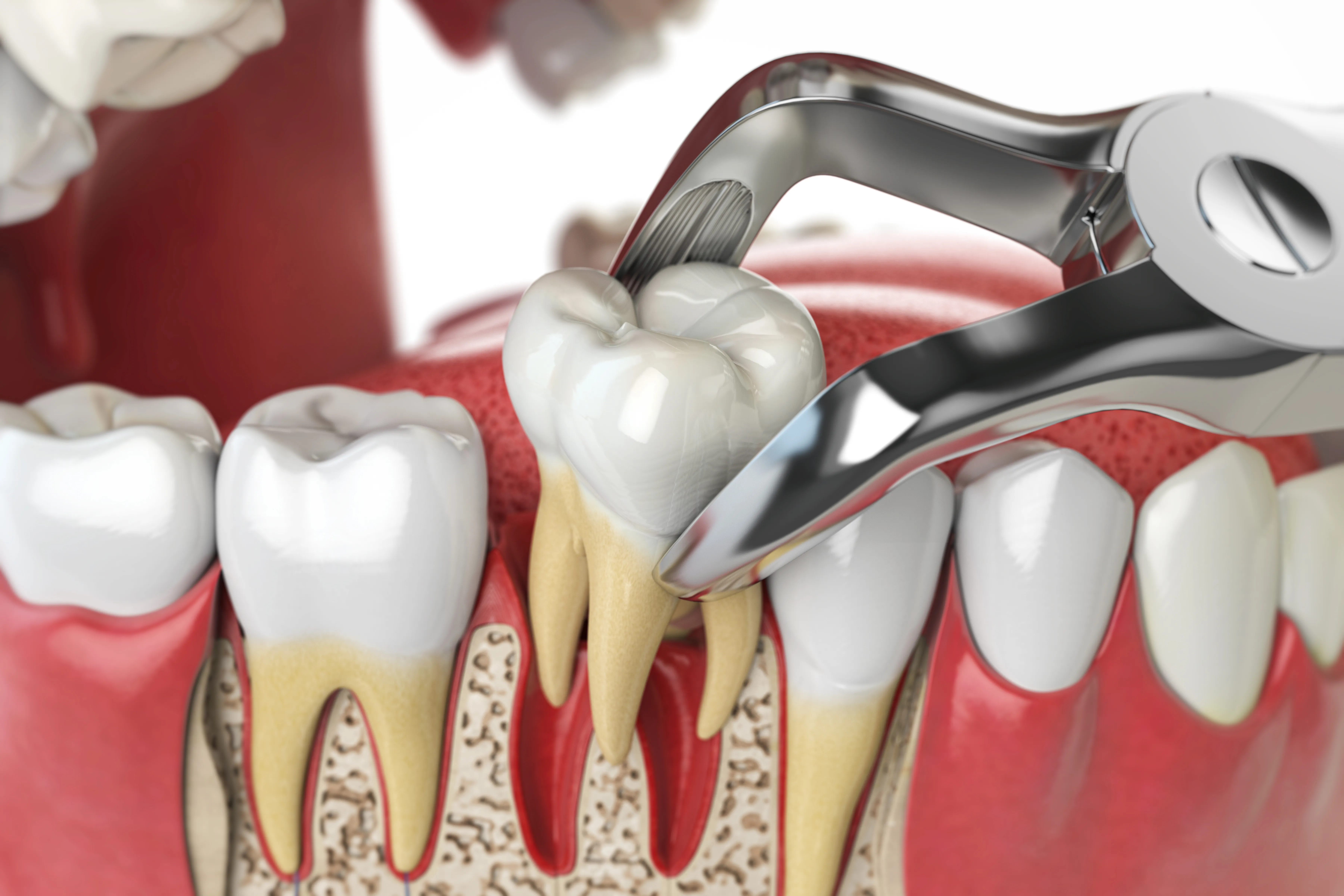
Tooth Extractions at Markham Family Dental Associates
Most patients coming in for an extraction are in one of two situations. Either they are in pain right now with a tooth that has broken down beyond what any restoration can fix, or they have known for a while that a tooth needs to come out and have been putting off the conversation. Our team approaches both the same way: look at the X-ray, explain what we see, and walk through the options honestly before scheduling anything.
We perform simple and surgical extractions for patients of all ages, with sedation options for patients who want to be relaxed or fully unaware during the procedure. We also discuss what comes next. A tooth that has been removed leaves a gap, and understanding your replacement options before the extraction helps you plan accordingly. We see patients from across Shelby County including Avoca, Atlantic, Minden, and Shelby, as well as patients from surrounding communities such as Omaha, Glen Oaks, West Des Moines, Clive, Jacksonville, Lincoln, and Sioux Falls.


What Is a Tooth Extraction?
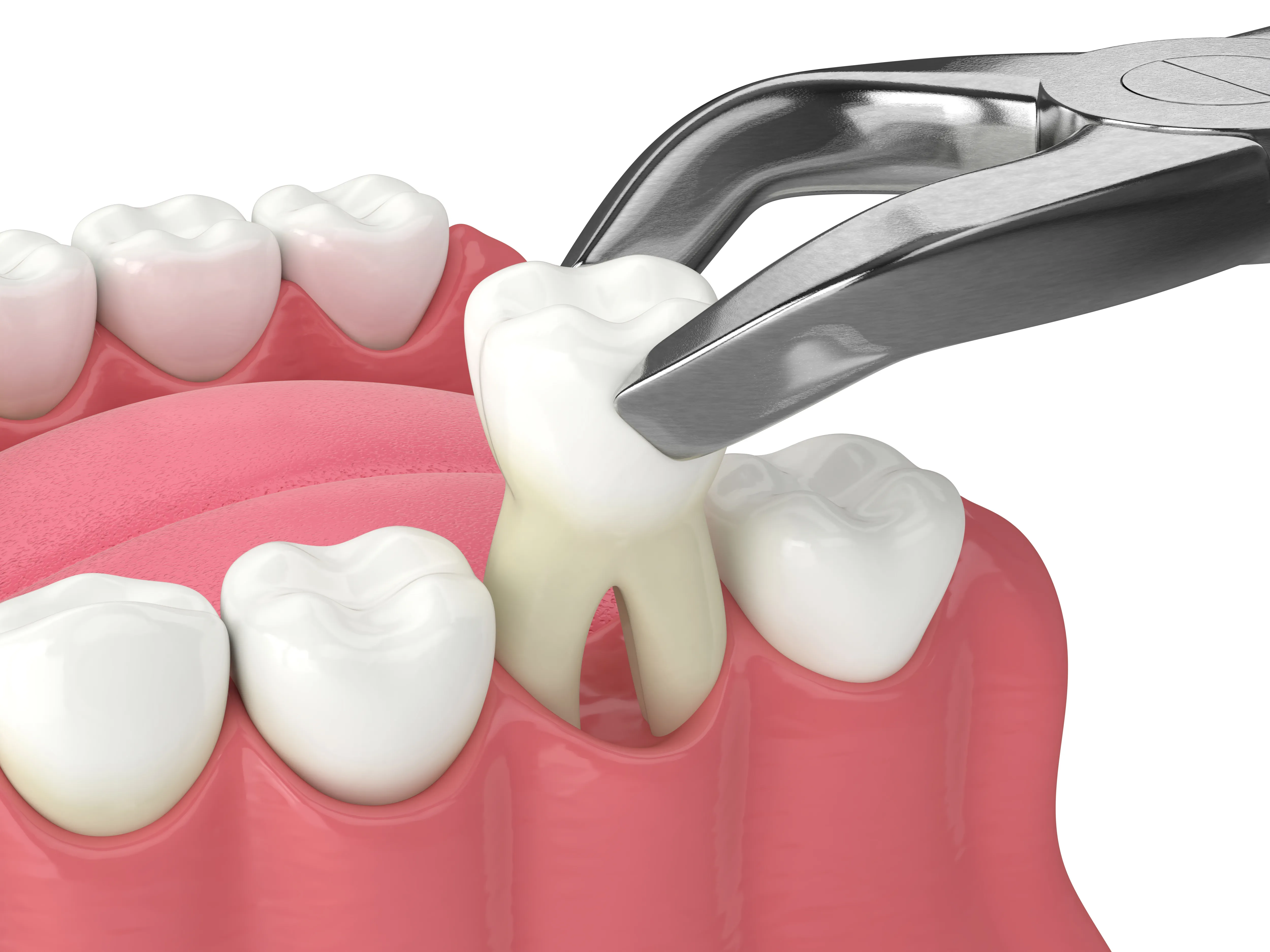
A tooth extraction is the removal of a tooth from its socket in the jawbone. Simple extractions involve teeth that are fully visible above the gumline and can be loosened and removed with dental instruments under local anesthetic. Surgical extractions are used when a tooth is broken at the gumline, impacted, or has roots that require a more involved approach to remove safely.
Both types are performed with local anesthetic that numbs the area completely. Sedation options are available for patients who want additional comfort or who experience significant dental anxiety. The extraction itself typically takes 10 to 30 minutes per tooth depending on the complexity of the root structure and how much tooth remains above the gumline.
When a Tooth Cannot Be Saved
Extraction is recommended when no other treatment can restore the tooth to a functional and safe condition. These are the most common clinical situations.

Decay That Has Destroyed Too Much Tooth Structure
When decay has progressed to the point where there is not enough healthy tooth remaining to support a crown or filling, extraction is the only remaining option. A tooth cannot be rebuilt from nothing.
A Vertical Fracture Through the Root
A crack that runs vertically through the root of a tooth cannot be repaired. The tooth will continue to split under biting force regardless of any restoration placed on top. When a fracture extends below the bone level, extraction is necessary.
Advanced Gum Disease With Bone Loss
Severe periodontal disease destroys the bone that holds the tooth in place. A tooth with significant bone loss around its roots becomes loose and eventually non-functional. When bone loss reaches a point where the tooth cannot be stabilized, extraction stops the infection from continuing to spread.
An Infection That Cannot Be Resolved
Teeth with abscesses that cannot be treated with a root canal, because too little tooth structure remains or the infection has already caused severe bone destruction, require extraction to eliminate the source of infection.
A Tooth That Is Blocking Orthodontic Treatment
Crowding severe enough that teeth cannot shift into alignment without additional space sometimes requires strategic extractions. This is a planned procedure coordinated with the overall orthodontic treatment plan, not an emergency.
A Baby Tooth That Has Not Fallen Out on Time
When a primary tooth fails to fall out and is blocking the permanent tooth underneath from erupting, extraction creates the space the adult tooth needs to come in properly. Timing matters here, and our team evaluates whether the permanent tooth is in a position to erupt once the space is opened.
Simple vs. Surgical Extraction: Understanding the Difference
The type of extraction your tooth requires determines the procedure, the recovery timeline, and in some cases the anesthesia approach.
| Simple Extraction | Surgical Extraction | |
|---|---|---|
| When it applies | Tooth is fully visible above the gumline | Tooth is broken at the gumline, impacted, or has curved roots |
| Procedure | Tooth is loosened and lifted from the socket | Incision in the gum, possible removal of bone, tooth sometimes sectioned |
| Anesthesia | Local anesthetic; sedation optional | Local anesthetic; sedation strongly recommended |
| Appointment time | 10 to 20 minutes per tooth | 20 to 45 minutes per tooth depending on complexity |
| Recovery | 2 to 4 days of soreness | 4 to 7 days, sometimes longer for deeply impacted teeth |
Our team determines which type is needed from the X-ray at your consultation. We explain the procedure in full before the appointment so there are no surprises on the day.
Does a Tooth Extraction Hurt?
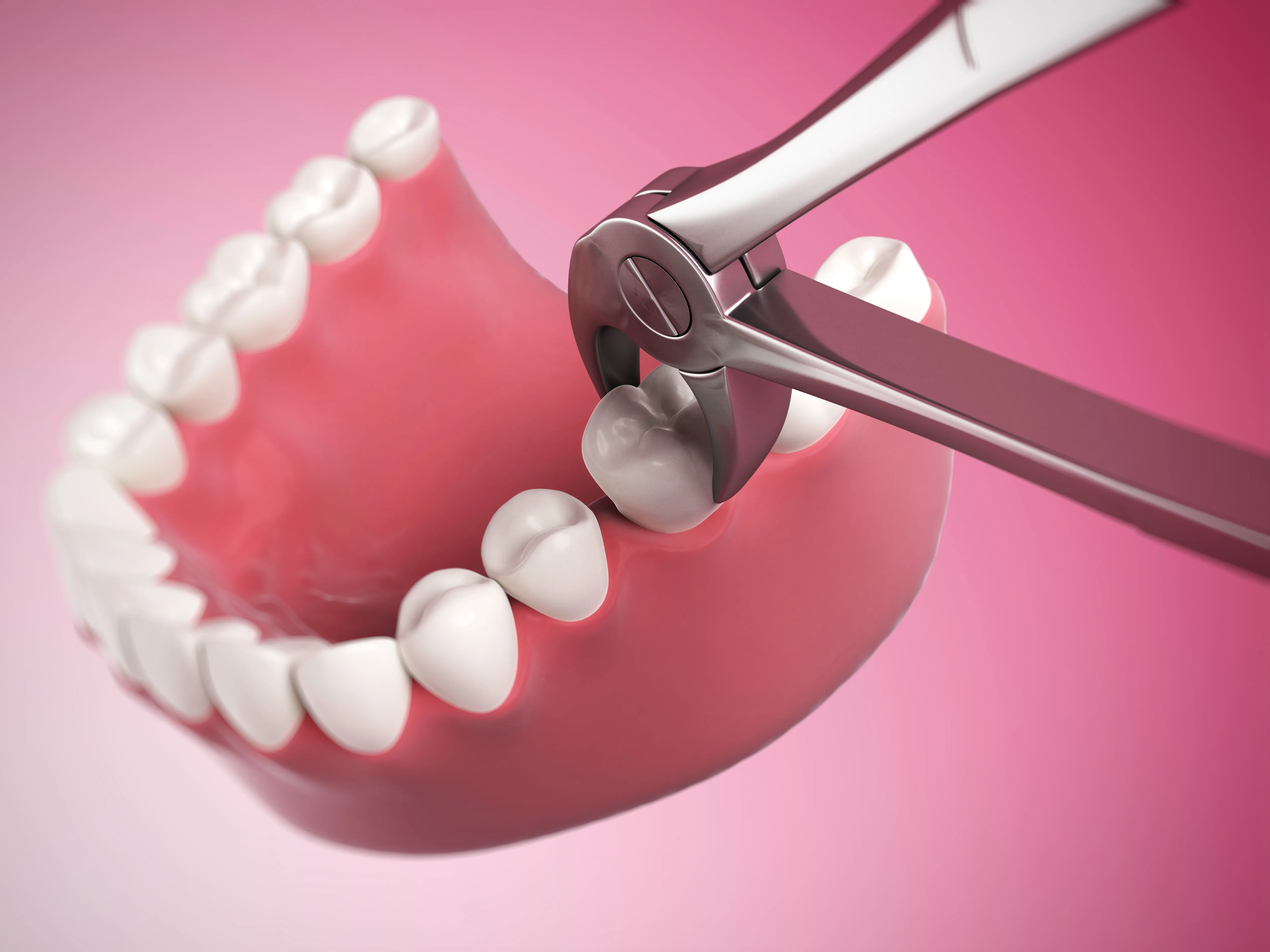
The extraction itself, performed with adequate local anesthetic, should not be painful. The area is numbed completely before any instruments are used. Patients feel pressure and movement during the procedure but not sharp pain. Sedation is available for patients who want to be relaxed or have little memory of the experience. What is uncomfortable is the recovery afterward, which is manageable and predictable with the right instructions and medication.
The extraction site is fully numbed before any work begins
Nitrous oxide, oral sedation, and IV sedation are available
Pressure and movement during extraction are normal; sharp pain is not, and we stop if it occurs
Soreness in the first 2 to 4 days is normal and managed with ibuprofen and acetaminophen
Prescription medication is provided when the case warrants it
What Tooth Extraction Can Prevent
When a tooth cannot be saved, delaying extraction can allow pain, infection, and damage to surrounding teeth or bone to get worse. Here is what timely treatment can help prevent.
Ongoing Tooth Infection
A badly infected tooth can continue to cause pain, swelling, drainage, or recurring flare-ups when the source is not removed or otherwise treated. If the tooth cannot be saved with root canal treatment or another restoration, extraction removes the source of the infection.
Damage to Nearby Teeth
A severely broken or infected tooth can affect the teeth around it, especially if decay, infection, or shifting continues over time. Removing a tooth that cannot be restored can help protect the surrounding area and make replacement planning more predictable.
Worsening Bone Loss
Infection, advanced gum disease, and long-term tooth damage can affect the bone around a tooth. If the tooth cannot be stabilized or restored, extraction may help stop the problem from progressing and allow the area to heal.
A More Difficult Emergency Extraction
A planned extraction is often easier to manage than an urgent extraction when the area is severely infected, swollen, or painful. When a tooth clearly cannot be saved, addressing it earlier can reduce the chance of needing treatment under more difficult conditions.
What Happens on the Day of Removal
1
Consultation and X-rays
Our team takes the needed X-rays to evaluate the tooth, the surrounding bone, the roots, and nearby structures. We review what we see with you, confirm whether the tooth can be saved, and explain the extraction plan before scheduling treatment.
2
Anesthesia and Sedation
The extraction area is numbed with local anesthetic. If you have chosen nitrous oxide, oral sedation, or IV sedation, that is administered first. We wait until you are comfortable and numb before starting.
3
Extraction
For a simple extraction, the tooth is gently loosened and removed from the socket. For a surgical extraction, a small incision may be made, and the tooth may be sectioned or removed in pieces when needed. The socket is cleaned, and stitches are placed when appropriate.
4
Recovery Instructions and Medications
Before you leave, our team provides written aftercare instructions, gauze to manage initial bleeding, and any prescriptions for pain medication or antibiotics when clinically appropriate. A driver is required if you have had IV or oral sedation. Your recovery timeline and what to watch for are reviewed with you before you go.
5
Replacement Planning
After the tooth is removed, our team reviews whether replacement is recommended and which options fit your situation. Depending on the tooth and your goals, options may include a dental implant, bridge, or partial denture. In some cases, a back tooth may not need immediate replacement, but we will explain the long-term considerations before you decide.
.webp)
What to Expect During Tooth Extraction Recovery
Recovery depends on whether the extraction was simple or surgical, the condition of the tooth, and how your body heals. Many patients feel significantly better within a few days after a simple extraction, while surgical extractions can take longer. Swelling and soreness are usually most noticeable early in recovery and should gradually improve. Knowing what is normal versus what warrants a call to our office makes recovery less stressful.
First 24 hours: rest, bite on gauze as instructed, eat soft foods, and avoid disturbing the socket
First few days: swelling and soreness may be present and should gradually improve
Avoid straws, smoking, vigorous rinsing, and spitting during early healing to protect the blood clot
Continue soft foods until chewing feels comfortable and our team says it is okay to return to your normal diet
Call us if pain worsens after the first few days, bleeding does not slow, swelling increases, or you notice fever, pus, or a bad taste that does not improve
Words From Our Patients
Frequently Asked Questions
BOOK APPOINTMENTHow much does a tooth extraction cost in Iowa without insurance?
Can I get a tooth pulled the same day in Harlan, Iowa?
Does getting a tooth pulled hurt?
Can I be sedated for a tooth extraction in Harlan, Iowa?
How long does it take to recover from a tooth extraction?
What is dry socket and how do I know if I have it?
Do I need to replace a tooth after it is extracted?
What's the cheapest way to get a tooth pulled in Iowa?
Will my insurance help pay for a tooth extraction?
Prepare for Your Visit
Patient Forms
Download and complete your forms before your appointment to save time when you arrive. Plan to come in 10 to 15 minutes early so we can get you settled.
Learn More

Insurance and Financing
We work with many PPO dental insurance plans and can file claims on your behalf when insurance applies. Financing options may be available for patients who need flexible payment options. Ask our front desk what works best for your situation.
Learn More
Contact Us
Start the Conversation
Address
2105 Pine St
Harlan, IA 51537, US
Harlan, IA 51537, US
Hours
Mon - Tue: 8:00am - 5:00pm
Wed: 7:00am - 2:00pm
Thu: 8:00am - 5:00pm
Fri: 7:00am - 12:00pm
Sat - Sun: Closed

(712) 755-5342

.svg)