



.svg)
.svg)
Dental Bridges in Harlan, Iowa
A gap where a tooth used to be affects how you eat, how neighboring teeth sit, and over time, how your jaw functions. A fixed bridge replaces the missing tooth permanently, without surgery.

.svg)
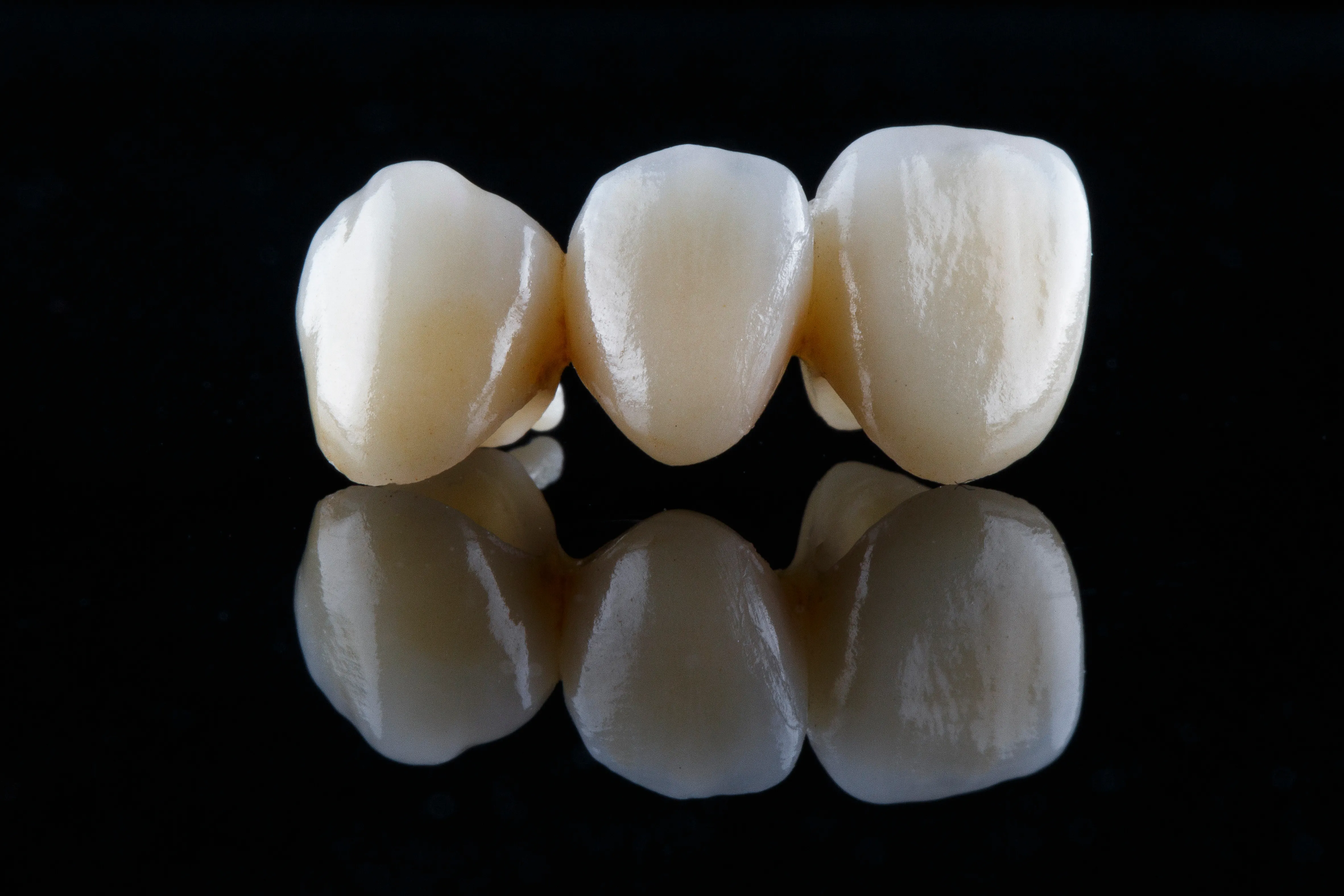
Dental Bridges at Markham Family Dental Associates
A missing tooth is easy to ignore when it is not visible. But the gap it leaves does not stay quiet for long. The teeth on either side begin to shift toward the space. The tooth above or below starts to drift. Bone in the area begins to shrink without a root to stimulate it. Most patients who have been living with a missing tooth for a year or two are already seeing some of these changes when they come in.

What Is a Dental Bridge?
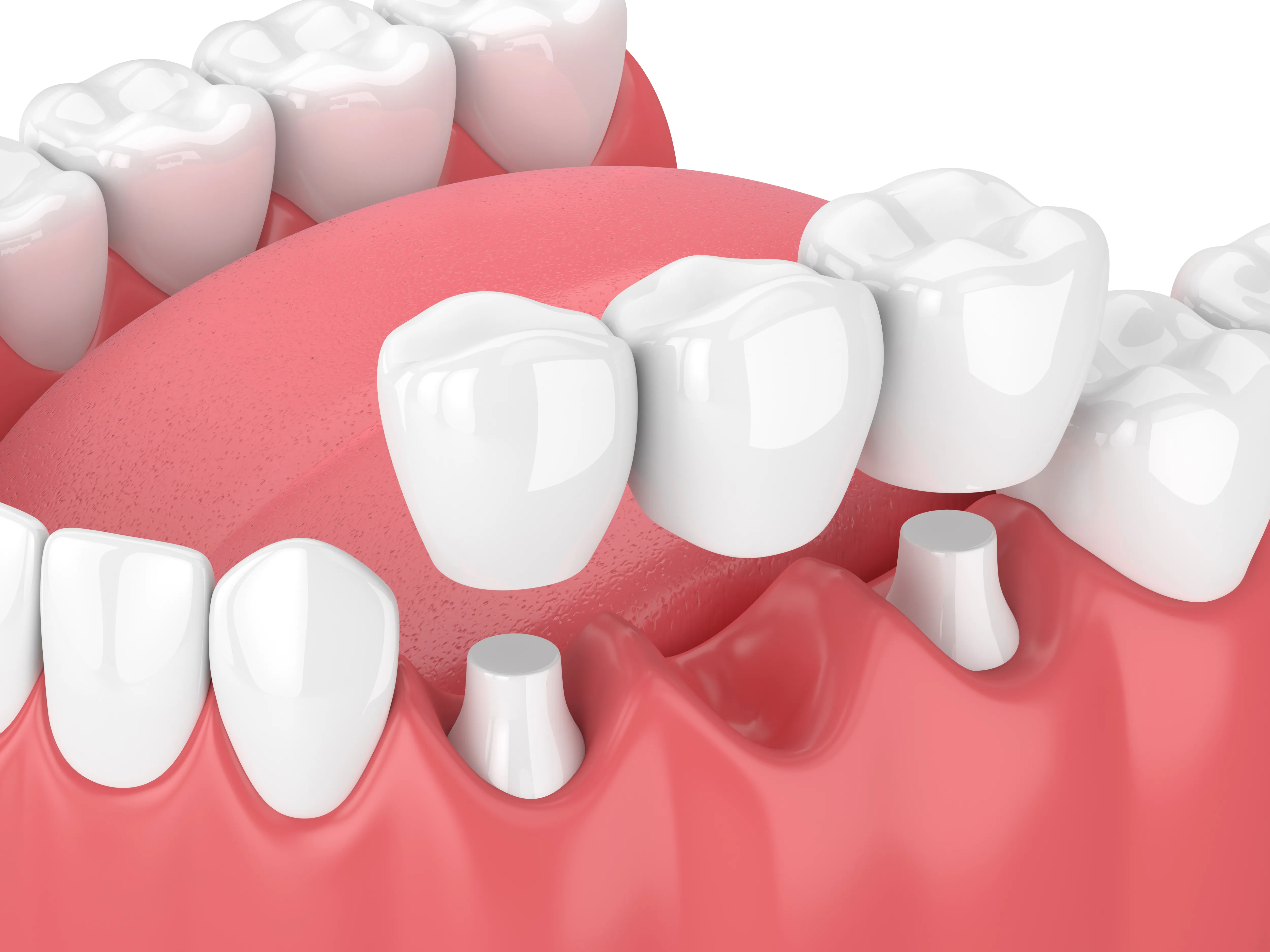
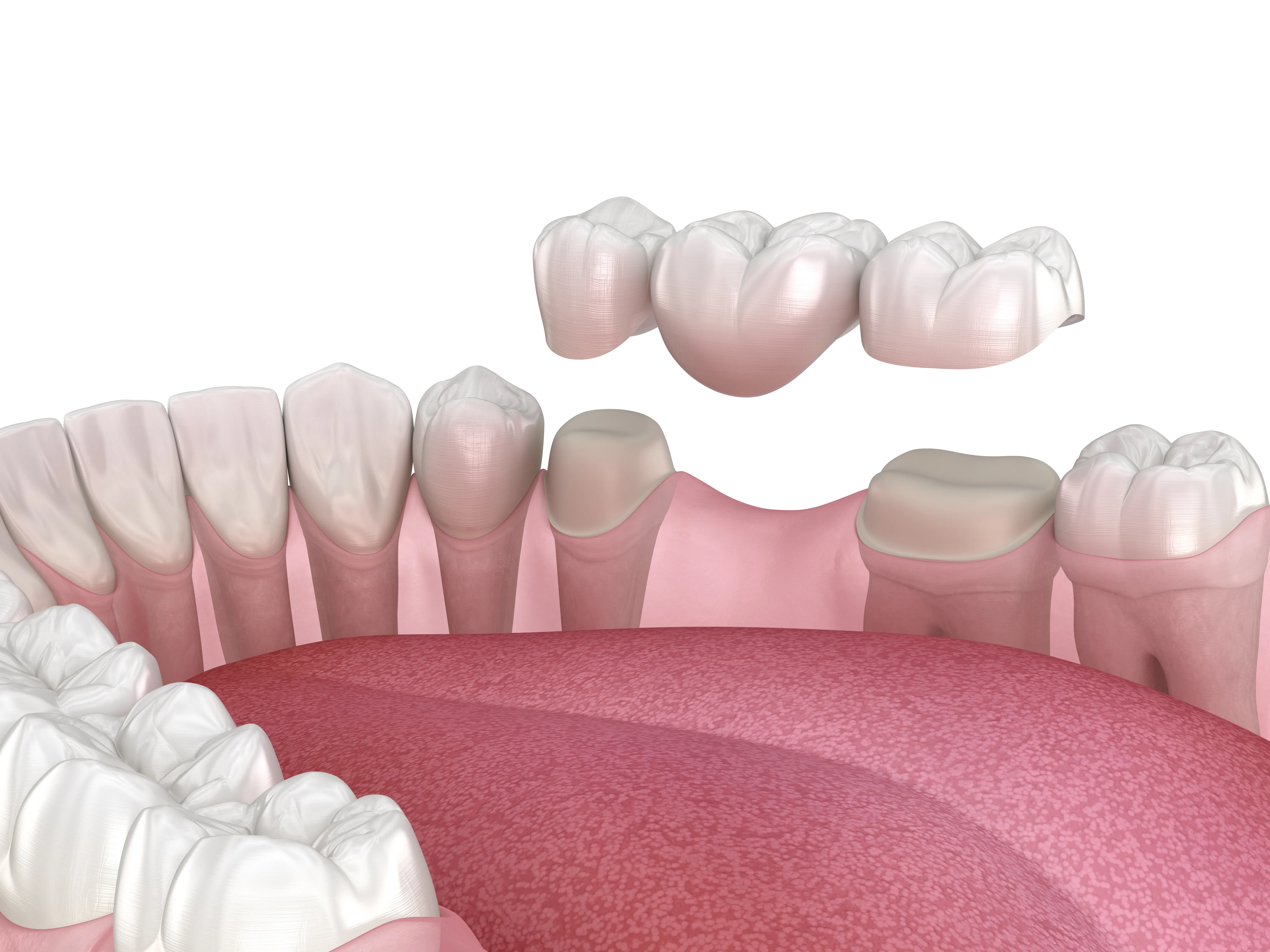
A dental bridge is a fixed restoration that replaces one or more missing teeth. It consists of an artificial tooth, called a pontic, held in place by crowns on the teeth immediately on either side of the gap. The two anchor teeth are shaped and prepared exactly as they would be for crowns, and the entire bridge is fabricated as a single connected piece and cemented permanently in place.
Once placed, the bridge is not removable. It sits in the mouth, looks like natural teeth, and handles normal chewing forces. Cleaning requires a floss threader to pass floss underneath the pontic, which takes a few seconds to learn and becomes routine quickly. Most patients stop noticing it is there within a few weeks.
What Happens If You Leave the Gap
A missing tooth is not a stable situation. The mouth adjusts around a gap in ways that create new problems over time.

Neighboring Teeth Drift
The teeth on either side of a gap have nothing to press against. Over months and years they tilt toward the open space, changing the contact points between teeth and creating areas where food traps and decay starts. Correcting drifted teeth later involves orthodontics that would not have been necessary if the space had been filled.
The Opposing Tooth Over-Erupts
The tooth above or below the gap has lost its contact. Without something to bite against, it continues to erupt, growing further out of the gumline. This changes the bite, can cause jaw discomfort, and may eventually compromise the tooth's own stability and root support.
Bone Loss at the Site
Bone in the jaw is maintained by the pressure of a tooth root. Once the root is gone, the bone at that site begins to resorb. After a year, there is measurable loss. After several years, the ridge has shrunk enough that implant placement becomes more complex and may require a bone graft first.
A Changed Bite and Jaw Strain
As teeth shift and the bite changes, the jaw muscles and joints compensate. Over time this can contribute to jaw soreness, uneven wear on remaining teeth, and headaches. A simple gap becomes a system-wide problem when it is left alone long enough.
Dental Bridge vs. Dental Implant
Both dental bridges and dental implants can replace a missing tooth. Here is how our team compares the two options.
| Dental Bridge | Dental Implant | |
|---|---|---|
| How it works | Artificial tooth anchored by crowns on the two neighboring teeth | Titanium post placed in the jawbone, topped with a crown |
| Surgery | None | Minor surgical procedure to place the implant |
| Effect on neighboring teeth | Both anchor teeth are shaped permanently | Neighboring teeth are not involved |
| Bone preservation | Does not stimulate bone where the tooth was lost | Preserves the jawbone at the implant site |
| Timeline | Two appointments over two to three weeks | Several months from placement to final crown |
| Cost | Lower upfront | Higher upfront, often more cost-effective over a lifetime |
Neither option is universally better. The right choice depends on the health of your neighboring teeth, your bone volume, your timeline, and your priorities. Our team discusses both at your consultation and lets you decide.
What Changes After a Bridge
Closing the gap changes more than the appearance of your smile.
You Eat Without Thinking About It
A missing tooth changes how you chew — most people shift to the other side without realizing it. A bridge restores the tooth so eating is symmetrical and normal again, without the compensations that develop over years of working around a gap.
Neighboring Teeth Stay Where They Are
The moment a bridge is in place, the teeth on either side have something to press against again. Drift stops. The positions that took years to hold are maintained.
The Gap Is Gone
For patients who have been self-conscious about a visible missing tooth, a bridge closes the space. The pontic is designed to look like a natural tooth and blend with your smile in conversation and photographs.
A Stable Solution Without Surgery
For patients who are not implant candidates due to insufficient bone, systemic health factors, or personal preference, a bridge delivers a permanent, fixed replacement without any surgical procedure. It is placed in two appointments and it stays.
Signs It Is Time to Replace Your Missing Tooth
It may be time to call if:
You have a tooth that was extracted and never replaced
You are already noticing the neighboring teeth shifting or tilting
You avoid eating on one side because of the missing tooth
You are self-conscious about a visible gap
It has been more than a few months since the extraction and you have not acted yet
Your dentist has recommended a bridge or implant and you want to understand your options
A quick check to help you decide.
What the Process Looks Like
1
Consultation and Planning
Our team examines the gap, evaluates the health and position of the anchor teeth, and takes X-rays. We discuss the bridge alongside implants so you have a complete picture of both options before choosing. If a bridge is the right direction, we walk through the cost, the timeline, and what the appointment involves.
2
Preparation and Temporary Bridge
Both anchor teeth are numbed and prepared — shaped to accept the crowns that will hold the bridge. A digital scan is taken and sent to the lab. A temporary bridge is placed to protect the prepared teeth and maintain the space while the permanent bridge is fabricated. The lab typically returns the final piece within one to two weeks.
3
Permanent Bridge Placement
The temporary bridge is removed. The permanent bridge is placed and checked for fit, bite, and appearance before anything is cemented. Once confirmed, it is bonded in place. Our team shows you how to use a floss threader to clean underneath the pontic. Most patients leave with the bridge adjusted and ready for normal function, though a short adjustment period can be normal.
Words From Our Patients
Where can I get a dental bridge in Harlan, Iowa?
How much does a dental bridge cost in Iowa?
Is a bridge or an implant better for a missing tooth?
How long does a dental bridge last?
Does getting a dental bridge hurt?
Can I get a bridge if I have been missing a tooth for a long time?
What is it like to clean a dental bridge?
Prepare for Your Visit
Patient Forms
Download and complete your forms before your appointment to save time when you arrive. Plan to come in 10 to 15 minutes early so we can get you settled.
Learn More

Insurance and Financing
We work with many PPO dental insurance plans and can file claims on your behalf when insurance applies. Financing options may be available for patients who need flexible payment options. Ask our front desk what works best for your situation.
Learn More
Contact Us
Start the Conversation
Address
2105 Pine St
Harlan, IA 51537, US
Harlan, IA 51537, US
Hours
Mon - Tue: 8:00am - 5:00pm
Wed: 7:00am - 2:00pm
Thu: 8:00am - 5:00pm
Fri: 7:00am - 12:00pm
Sat - Sun: Closed

(712) 755-5342

.svg)