


.svg)
.svg)
Silver Diamine Fluoride (SDF) in Harlan, Iowa
A cavity does not always mean a drill. Silver diamine fluoride is a liquid brushed onto a decayed tooth that stops the cavity where it stands, with no numbing, no needles, and no noise.

.svg)
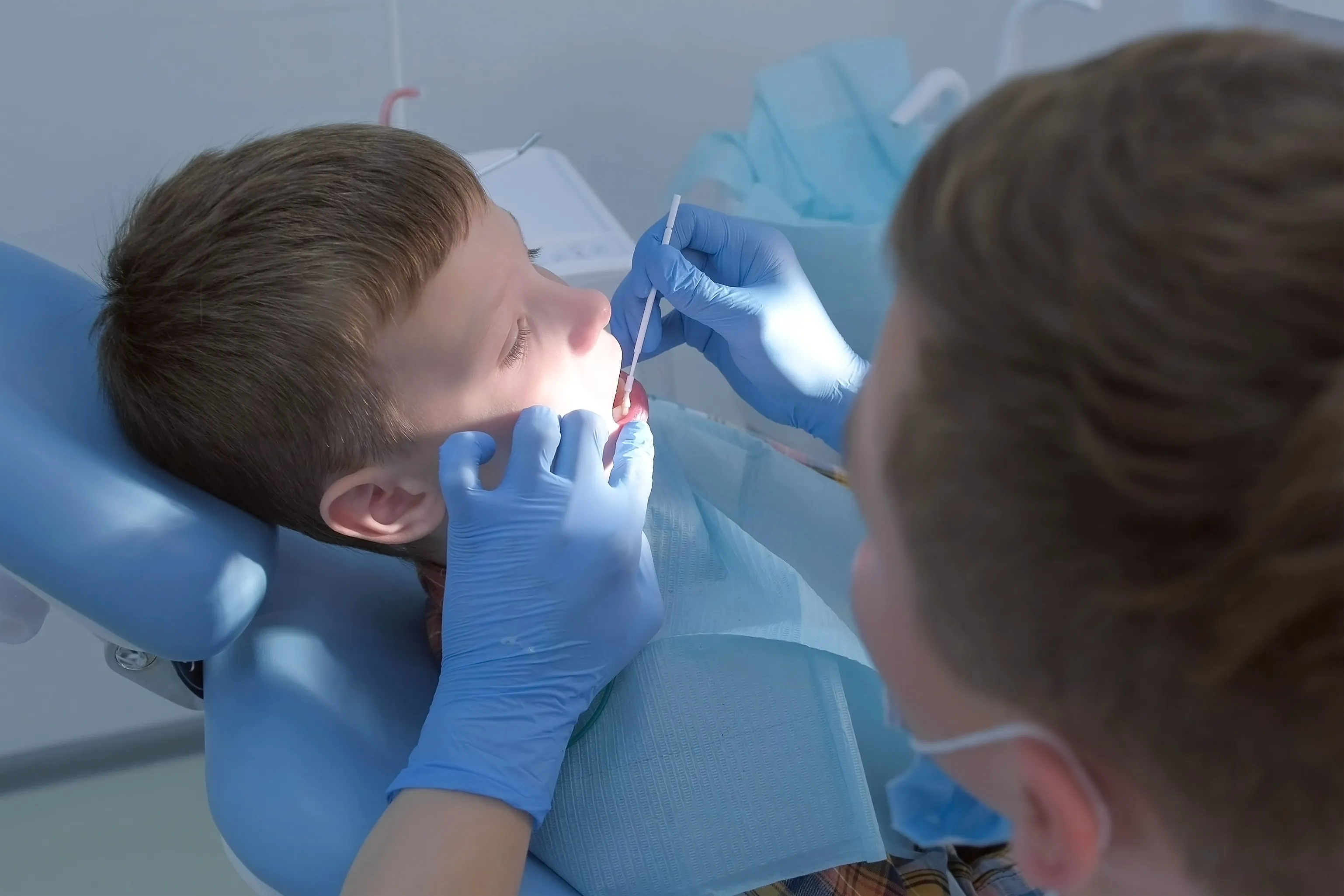
Silver Diamine Fluoride at Markham Family Dental Associates
Families searching for a silver diamine fluoride dentist usually find national health articles instead of someone who can actually apply it. We can. Markham Family Dental offers SDF treatment in our Harlan office for the two groups it helps most: young children with cavities in baby teeth, and seniors with decay along the gumline. The visit takes minutes, nothing is drilled, and patients from Avoca, Atlantic, Minden, and the Council Bluffs area are in and out the same morning.

What Is Silver Diamine Fluoride?
Silver diamine fluoride, usually shortened to SDF, is a 38 percent liquid solution that a dentist brushes onto a cavity to stop it from growing. The silver kills the bacteria causing the decay, and the fluoride hardens the tooth structure underneath. No drilling, no anesthetic, and no removal of the tooth are involved.
SDF treatment is cleared by the FDA, which also granted it a Breakthrough Therapy designation for arresting cavities in 2016, and dentists in Japan have used silver fluoride solutions for more than 40 years. It does not rebuild the missing part of the tooth the way a filling does. It freezes the cavity in place, which is exactly what a wiggly three-year-old or a fragile ninety-year-old often needs. How it manages that comes down to two ingredients doing two jobs.
How SDF Stops Tooth Decay
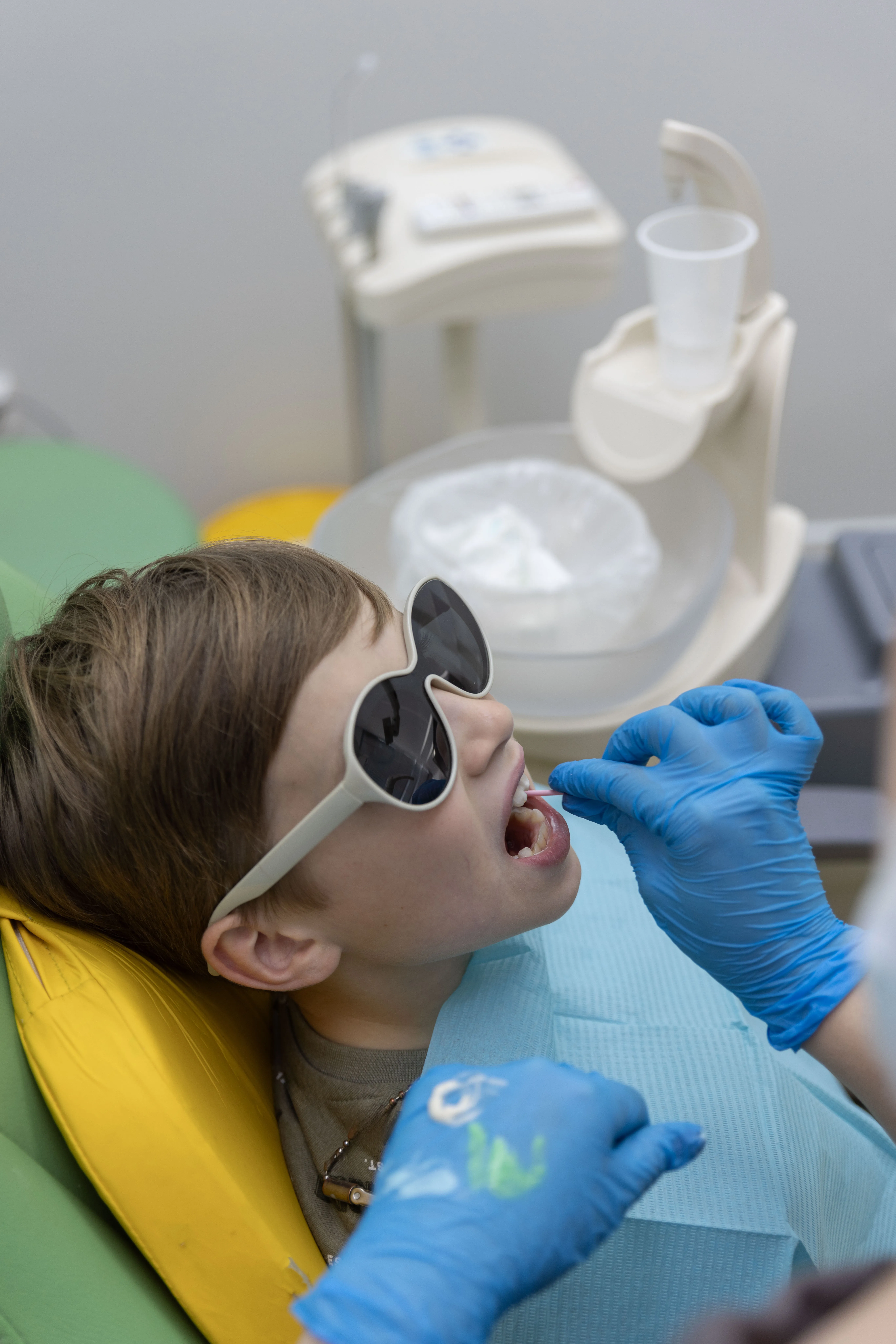
The whole appointment usually takes a few minutes per tooth.
1
Exam and Tooth Check
We confirm the cavity is a fit for SDF: how deep it is, whether the nerve is involved, and whether a filling or crown would serve the tooth better. Decay that has reached the nerve needs more than SDF can give.
2
Dry and Isolate the Tooth
The tooth is dried and kept away from the cheek and tongue with cotton. This protects the surrounding skin from temporary staining and helps the liquid soak exactly where it should.
3
Brush On the SDF
A drop of the solution is painted onto the cavity with a tiny brush and left to absorb for a minute or two. Most children never realize the treatment already happened. There is no numbing shot, no drill, and no sound.
4
Recheck and Reapply
The treated spot is checked at your regular visits, and the application is commonly repeated around six months later to keep the decay arrested.
Who SDF Helps Most
SDF earned its place in dentistry by serving the patients a drill serves worst.

Young Children and Toddlers
A toddler with cavities in baby teeth often cannot hold still for a filling, and baby teeth still need protecting until they fall out on schedule. SDF stops the decay in a visit a two-year-old can actually tolerate.
Kids Who Would Otherwise Need Anesthesia
When a child has several cavities and cannot tolerate treatment awake, the conventional answer is general anesthesia in a pediatric hospital setting. SDF can arrest the decay first, so treatment happens on the family's schedule, not the operating room's, and sometimes anesthesia is avoided entirely.
Patients With Special Needs
For patients with sensory, cognitive, or physical conditions that make conventional dentistry overwhelming, SDF delivers real treatment in seconds of contact. It is one of the gentlest tools we have.
Anyone With Dental Anxiety
Fear of the drill keeps people away until small cavities become big ones. A no-needle, no-drill option breaks that cycle, and it pairs well with our sedation options when more work is eventually needed.
Seniors With Root Decay
Gums recede with age and expose the softer root surface, where cavities spread fast, especially with dry mouth from common medications. SDF stops root decay without subjecting a long-treasured tooth, or a fragile patient, to more dentistry than necessary.
Teeth Waiting for a Filling
SDF is also a drill-free alternative to filling a tooth right away. A cavity arrested today can be filled or crowned months later, when the child is older, the schedule allows, or the budget recovers. The decay does not get a head start while you wait.
What About the Black Stain?
Silver diamine fluoride turns the decayed part of the tooth permanently black. That is the trade-off, and we will not minimize it. The stain is actually proof the treatment worked: the blackened area is dead bacteria and hardened tooth. Healthy enamel does not stain, so a spot on a back molar is usually invisible in daily life. A front tooth is a real conversation, and we have it with you before anything is applied.
The stain on the tooth cannot be removed by polishing or whitening, and it does not fade or wash off. It stays until the tooth is restored or, for a baby tooth, until the tooth falls out naturally. It can be covered: a tooth-colored glass ionomer filling placed over the treated spot hides the dark area while keeping the protection, an approach dentists call SMART. A skin or gum smudge from a stray drop behaves differently: it looks like a small temporary tattoo and fades on its own within one to three weeks. A brief metallic taste after application fades the same day. Whether that trade-off makes sense depends on what you compare it against.
SDF vs Fluoride Varnish vs a Filling
The pros and cons come down to stain versus drill versus structure.
| Silver Diamine Fluoride | Fluoride Varnish | A Filling | |
|---|---|---|---|
| What it does | Stops an existing cavity from growing | Prevents cavities by strengthening enamel | Repairs the tooth by replacing lost structure |
| Best for | Cavities in patients who cannot have or do not want drilling yet | Routine prevention at checkups | Teeth that need their shape and strength back |
| Drilling or numbing | None | None | Usually local anesthetic, sometimes more |
| Appearance | Treated spot turns black | No change | Tooth-colored |
| Visits | Minutes, repeated around six months | Seconds at a regular cleaning | Seconds at a regular cleaning |
Many plans use two of the three: fluoride varnish to protect healthy teeth, SDF to arrest active decay, and a filling later where structure must be rebuilt. Whether that sequence is safe for your child is usually the next question parents ask.
Is SDF Safe?
Yes. SDF has been used on millions of patients, has decades of use in Japan and Australia behind it, and is supported for cavity arrest by the American Dental Association and the American Academy of Pediatric Dentistry. SDF is not toxic at treatment doses; a full application uses a fraction of a drop. Known side effects are the black stain on the treated spot, a brief metallic taste, and occasionally mild, short-lived gum irritation where the liquid touched soft tissue.
SDF is not used on patients with a silver allergy, on teeth with decay into the nerve, or on mouths with open sores or ulcers at the application site. None of those apply to most patients, and the exam in step one screens for all of them. The other question every family asks is what it costs.
SDF is not used on patients with a silver allergy, on teeth with decay into the nerve, or on mouths with open sores or ulcers at the application site. None of those apply to most patients, and the exam in step one screens for all of them. The other question every family asks is what it costs.
Words From Our Patients
Why Patients Choose Markham Family Dental for SDF
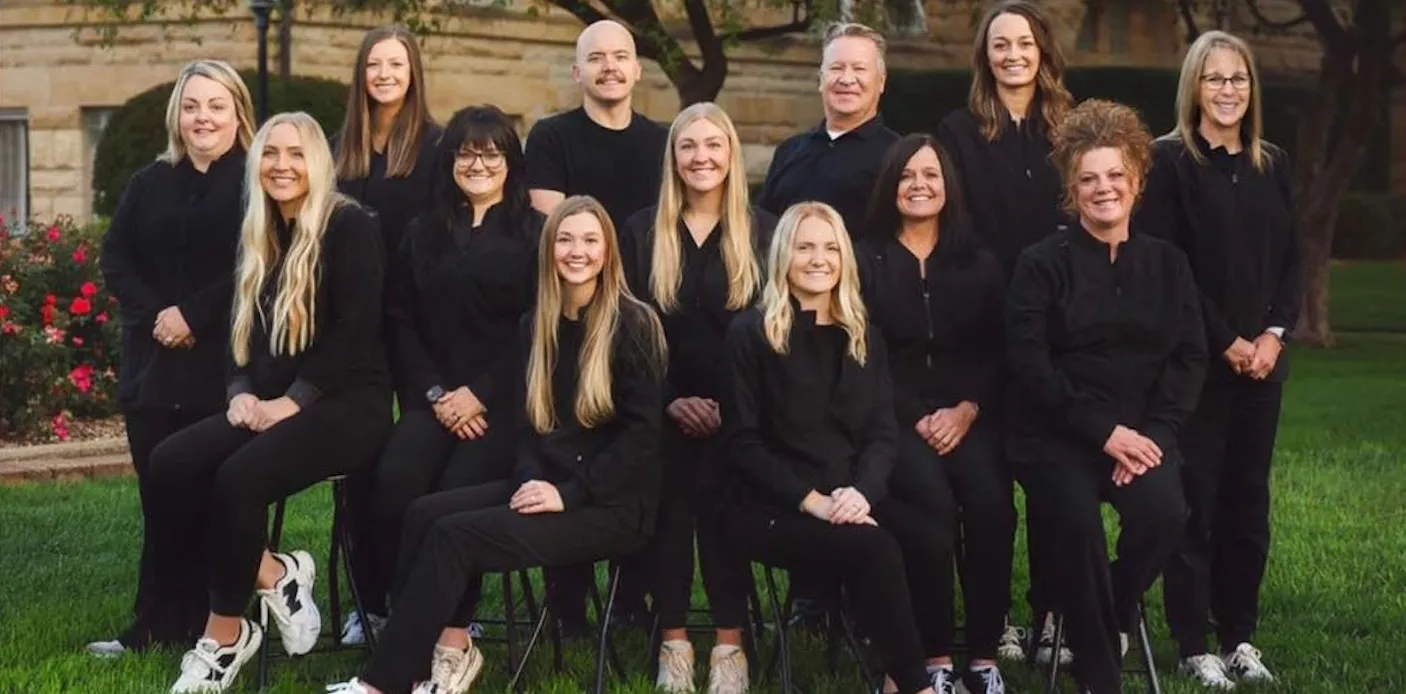
The same team that stops a toddler's first cavity also treats grandma's root decay. Markham has cared for Shelby County families since 1990, and some patients are the third generation of their family in our chairs.
Care for Every Age Under One Roof
Meet the Team

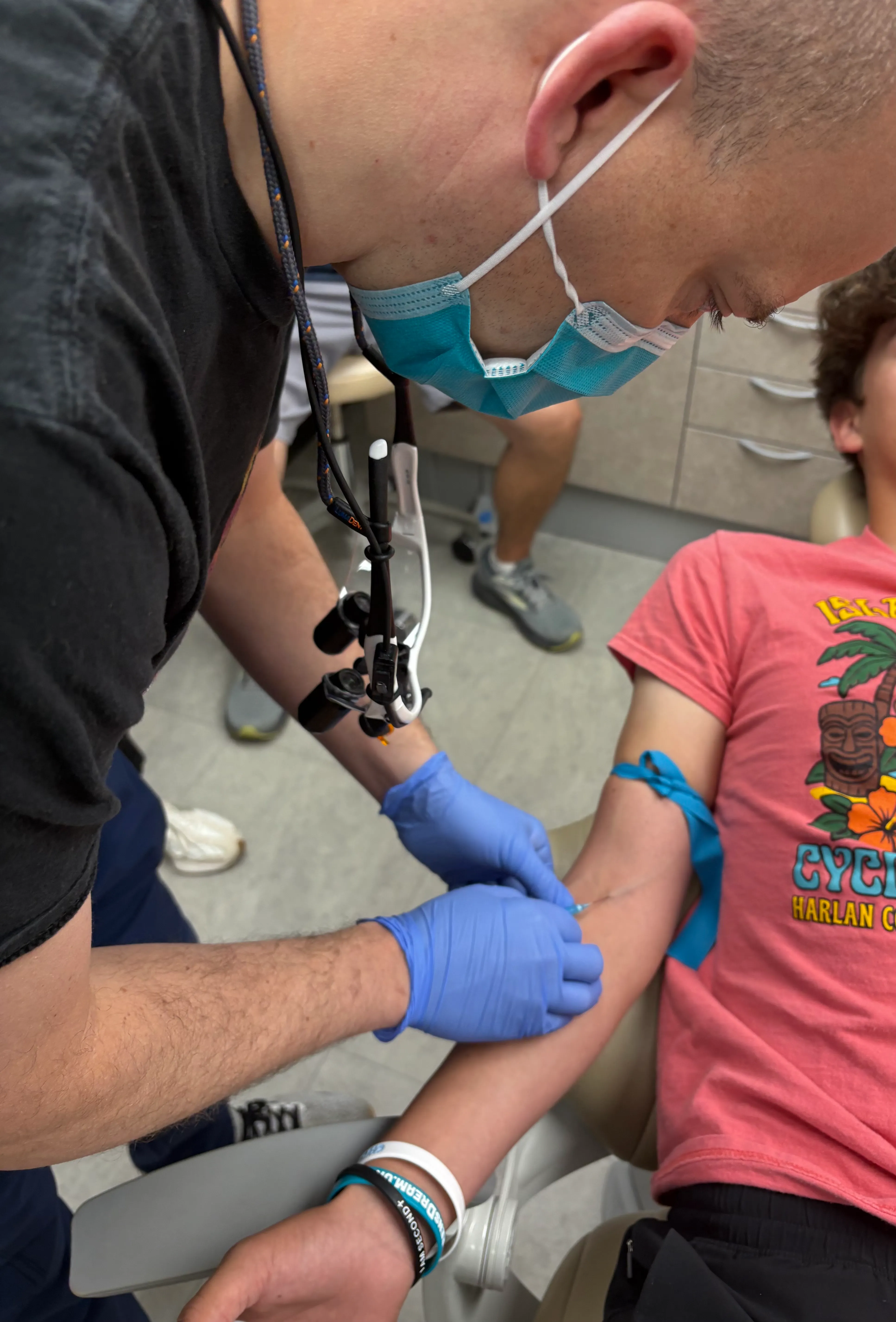
We reach for the least invasive treatment that solves the problem, and SDF is often exactly that. When a tooth needs more, fillings, crowns, and IV sedation are all available in the same office, with no referral.
The Gentlest Option Comes First
Sedation Options
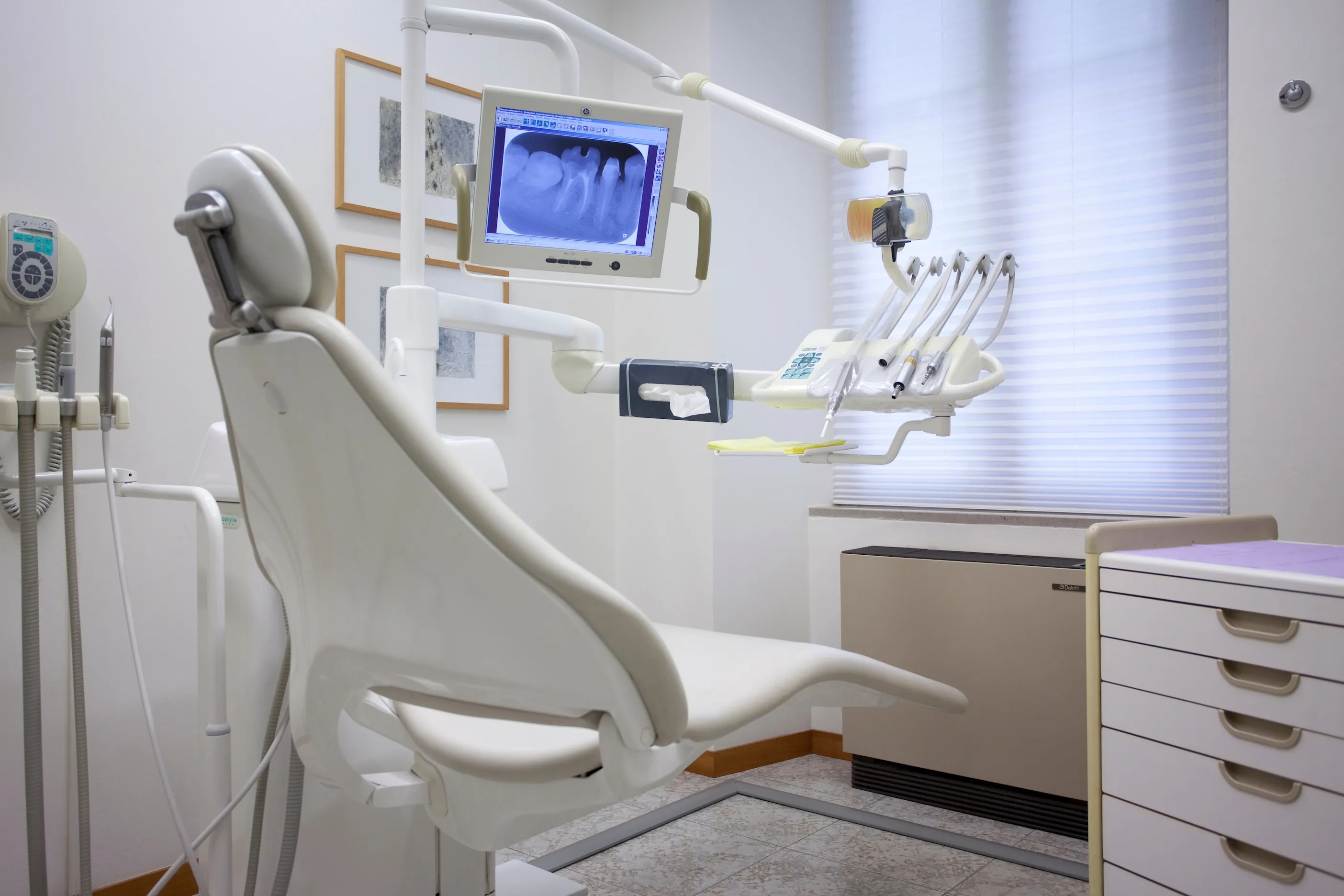
We serve families from across Shelby County, including Avoca, Atlantic, Minden, and Shelby, as well as patients from surrounding communities such as Omaha, Glen Oaks, West Des Moines, Clive, Jacksonville, Lincoln, and Sioux Falls. An SDF visit takes minutes, so even a longer drive stays a short trip.
Treatment Close to Home
Book a Consultation
Frequently Asked Questions
Common questions about silver diamine fluoride in Harlan, Iowa.
BOOK APPOINTMENTWhat is silver diamine fluoride used for?
How do you remove silver diamine fluoride from teeth?
Is silver diamine fluoride safe?
Does silver diamine fluoride fade?
How long does silver diamine fluoride last?
How does silver diamine fluoride work?
Will my child still need a filling after SDF?
Where can I get silver diamine fluoride near me?
Do cavities in baby teeth really need treatment?
How long does silver diamine fluoride stain your teeth?
Prepare for Your Visit
Patient Forms
Download and complete your forms before your appointment to save time when you arrive. Plan to come in 10 to 15 minutes early so we can get you settled.
Learn More

Insurance and Financing
We work with many PPO dental insurance plans and can file claims on your behalf when insurance applies. Financing options may be available for patients who need flexible payment options. Ask our front desk what works best for your situation.
Learn More
Contact Us
Start the Conversation
Address
2105 Pine St
Harlan, IA 51537, US
Harlan, IA 51537, US
Hours
Mon - Tue: 8:00am - 5:00pm
Wed: 7:00am - 2:00pm
Thu: 8:00am - 5:00pm
Fri: 7:00am - 12:00pm
Sat - Sun: Closed

(712) 755-5342

.svg)