


.svg)
.svg)
Contents
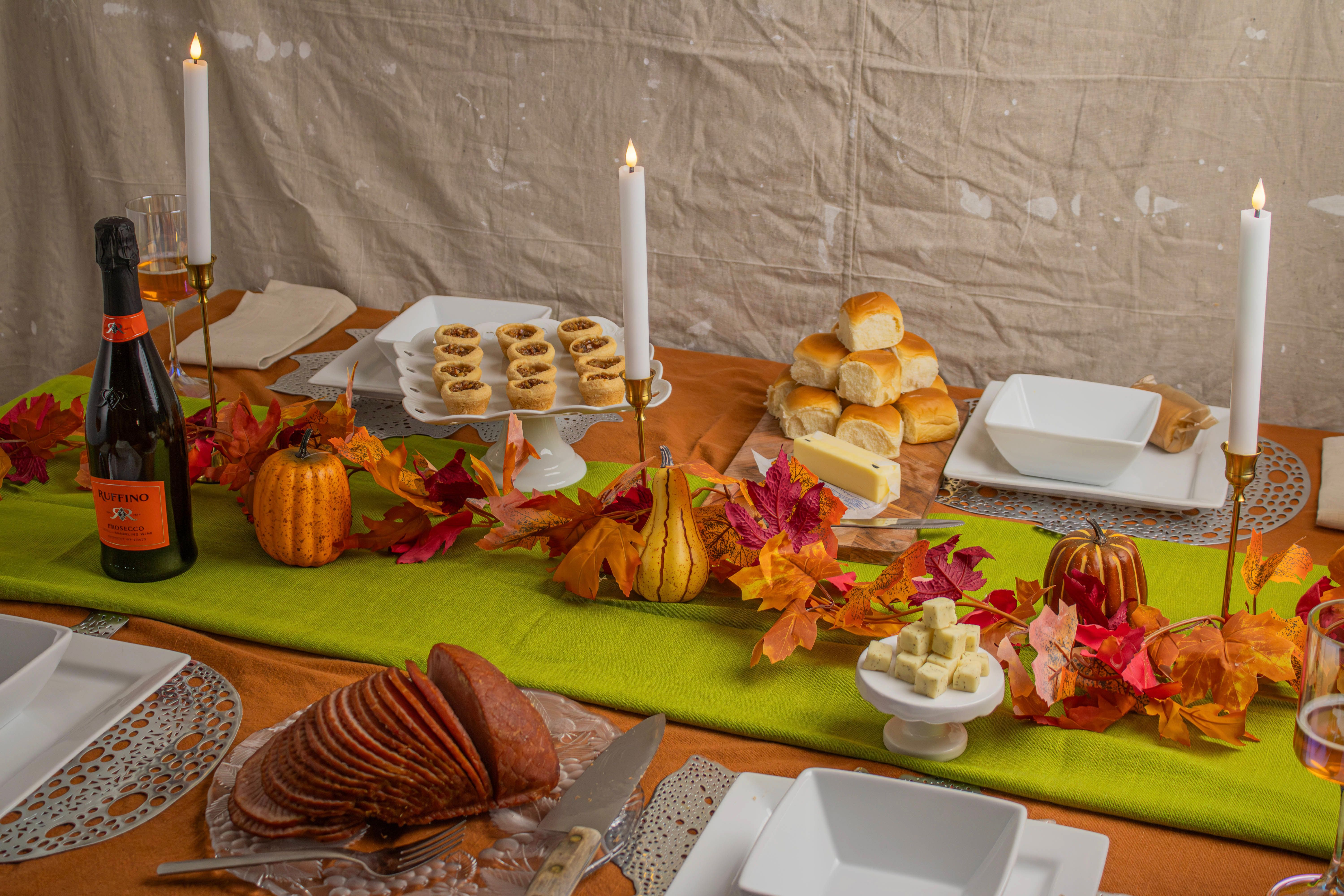
Tips for a tooth-friendly Thanksgiving are more useful when they account for the teeth you actually have—not an imaginary perfect mouth. A person with braces, a temporary crown, implants, dentures, sensitive teeth, a recent filling, or a healing extraction has different needs at the dinner table.
Our broader holiday article ’Tis the Season for Healthy Dental Choices covers sugar frequency, holiday drinks, travel, and general prevention. This Thanksgiving guide focuses specifically on how common holiday foods interact with dental work and oral conditions.
If You Have a Temporary Crown
Temporary crowns are designed to protect a prepared tooth until the final restoration is ready, but they are not as strong or retentive as the final crown.
Avoid pulling on them with sticky caramel, taffy, very chewy candy, or foods that require forceful tearing. Chew carefully on the other side if your dentist instructed you to.
If the temporary comes off, save it and contact the dental office. Do not permanently reattach it with household glue.
If You Have a Permanent Crown
A well-functioning permanent crown should handle normal chewing, but it is still attached to a natural tooth that can fracture or develop decay at the margin.
Do not test it on ice, unpopped popcorn kernels, nutshells, or bones. If a crown feels newly loose, catches when you bite, or becomes sensitive, schedule evaluation rather than repeatedly chewing to see whether it “settles.”
Markham’s dental crowns page explains how crowns protect structurally weakened teeth.
If You Recently Had a Filling
Many modern fillings can be used normally once the anesthetic has worn off, but the tooth may remain temporarily sensitive depending on the depth of the restoration and the bite.
Until numbness is completely gone, avoid chewing because it is easy to bite the cheek, lip, or tongue without realizing it.
If the tooth feels “too high” when you bite after the numbness is gone, contact the dentist. A small bite adjustment can sometimes prevent days of unnecessary soreness.
If You Have an Older Large Filling
Large restorations can leave remaining cusps thinner and more vulnerable to fracture. Thanksgiving foods such as hard nuts, bones, popcorn kernels, and ice create concentrated forces.
Chew normally but do not use the holiday to test the strength of a tooth that already has a history of cracking or sensitivity.
Our dental fillings page explains how restoration size and remaining tooth structure influence treatment choices.
If You Wear Braces
Cut corn off the cob instead of biting directly into it. Avoid hard nuts, unpopped popcorn kernels, brittle, very sticky candy, and foods that can bend wires or pull brackets loose.
Turkey, mashed potatoes, soft vegetables, stuffing, soft rolls, cranberry sauce, and many desserts can be eaten more easily when foods are cut into manageable pieces.
If You Wear Clear Aligners
Remove aligners before eating anything and before drinking anything other than plain water. Hot beverages can distort some plastics, while wine, coffee, tea, and colored foods can stain trays.
Store aligners in their case—not wrapped in a Thanksgiving napkin. Clean the teeth before replacing trays when practical.
If You Wear a Retainer
Most removable retainers should also come out for meals unless your orthodontic team has given different instructions.
Thanksgiving gatherings are a classic environment for appliances to disappear into napkins and trash bags. The case should be on the table or in a pocket before the first bite.
If You Have a Dental Implant
An implant-supported crown does not get a cavity, but the surrounding gum and bone still require plaque control. Normal Thanksgiving foods are generally fine after healing, but implants are not tools for cracking hard objects.
Clean around the implant as directed, especially after fibrous foods such as turkey or vegetables become trapped around the restoration.
If You Have Implant-Supported Full-Arch Teeth
Patients with fixed full-arch implant restorations should follow the food and cleaning instructions given for their specific prosthesis. During the healing phase, food consistency may be limited even if the restoration feels strong.
Do not assume a fixed temporary bridge can handle the same forces as a fully healed final restoration.
If You Wear Dentures
Cut hard or fibrous foods into smaller pieces and chew slowly on both sides to keep the denture more stable. Very sticky foods can dislodge a denture or collect underneath it.
If the denture repeatedly moves, creates sores, or makes it difficult to eat nutritious foods, an adjustment may be needed.
If Your Teeth Are Sensitive
Hot coffee followed immediately by ice water, cold pie, or chilled drinks may trigger sensitivity in exposed dentin, cracked teeth, or recently treated teeth.
Temperature sensitivity that is brief and familiar may be manageable. Pain that lingers, throbs, wakes you at night, or occurs when biting deserves evaluation.
If You Have Gum Recession
Exposed root surfaces are more sensitive and do not have the same enamel covering as the crown of the tooth. Acidic cranberry products, wine, or very cold drinks may be uncomfortable.
Use a soft toothbrush and desensitizing or high-fluoride products when recommended rather than scrubbing harder.
If You Recently Had a Tooth Extracted
Follow the specific post-operative instructions from your dentist or oral surgeon. During early healing, very hot foods, hard foods, vigorous rinsing, straws, alcohol, and smoking may be restricted depending on the procedure and timing.
Do not use a holiday meal as the reason to ignore surgical instructions. The socket needs time to stabilize and heal.
If You Recently Had Oral Surgery
Choose foods that match the healing stage: mashed potatoes, soft vegetables, eggs, yogurt, smooth soups that are not too hot, and other foods recommended by your clinician.
A fixed calendar does not determine when you can return to every texture. Healing, swelling, procedure type, and your surgeon’s instructions matter more.
If You Have a Root-Treated Tooth Waiting for a Crown
A back tooth that has undergone root canal treatment and is awaiting definitive coverage may have less remaining structure than it appears to.
Avoid hard biting on that tooth until the restorative plan is completed. A painless tooth can still fracture.
If You Have a Cracked Tooth You Are Monitoring
Do not chew ice, hard nuts, bones, or popcorn kernels on the affected side. Pain when biting or releasing pressure can be a sign that the crack is moving under load.
If symptoms increase over the holiday, schedule care rather than waiting for the crack to become a larger fracture.
Thanksgiving Foods That Are Usually Easy on Dental Work
- Mashed potatoes.
- Soft cooked vegetables.
- Turkey cut into bite-sized pieces.
- Soft stuffing.
- Egg dishes.
- Soft rolls when appropriate.
- Plain yogurt or soft desserts.
- Water.
“Easy” does not mean sugar-free or nutritionally perfect. It means the texture is less likely to pull on appliances or create concentrated fracture forces.
Foods That Deserve More Caution
- Unpopped popcorn kernels.
- Very hard nuts.
- Ice.
- Bones.
- Hard brittle.
- Sticky caramels and taffy.
- Foods that require forceful tearing with the front teeth.
What About Cranberry Sauce and Pie?
Enjoy them if they fit your diet. The dental issue is not that dessert is forbidden. Sugar frequency and acidity matter more than one serving eaten with a meal.
Have sweets as part of a defined eating period, drink water afterward, and return to your normal oral-care routine.
Do Not Brush Aggressively Right After an Acidic Meal
Wine, citrus, cranberry products, soda, and other acidic foods can temporarily soften the enamel surface.
Rinse with water and return to normal gentle brushing later rather than trying to “scrub off” the meal immediately.
Flossing After Thanksgiving Can Be Especially Useful
Turkey fibers, corn, leafy vegetables, and other foods can lodge between teeth. Clean gently with floss or another interdental tool.
If food repeatedly traps in the same place, mention it at your next dental exam. An open contact, cavity, broken restoration, or gum change may be creating the trap.
When a Thanksgiving Dental Problem Should Not Wait
Call promptly for increasing facial swelling, fever with dental pain, a knocked-out permanent tooth, uncontrolled bleeding, a major tooth fracture, or severe worsening pain.
Breathing or swallowing difficulty and major facial trauma require emergency medical care.
A Tooth-Friendly Thanksgiving Is Mostly About Matching Food to the Mouth
You do not need a special “dental diet” to enjoy Thanksgiving. The useful question is whether your current teeth, restorations, appliances, or healing tissues can handle the food you are choosing.
Cut hard foods smaller, avoid sticky or brittle foods when dental work is vulnerable, keep aligners and retainers in their cases, follow surgical instructions, and drink water between other beverages. That makes Thanksgiving easier on the smile without turning dinner into a list of restrictions.
People Ask
 Dr. Roy Burkhalter, DDS



.svg)