



.svg)
.svg)
Contents
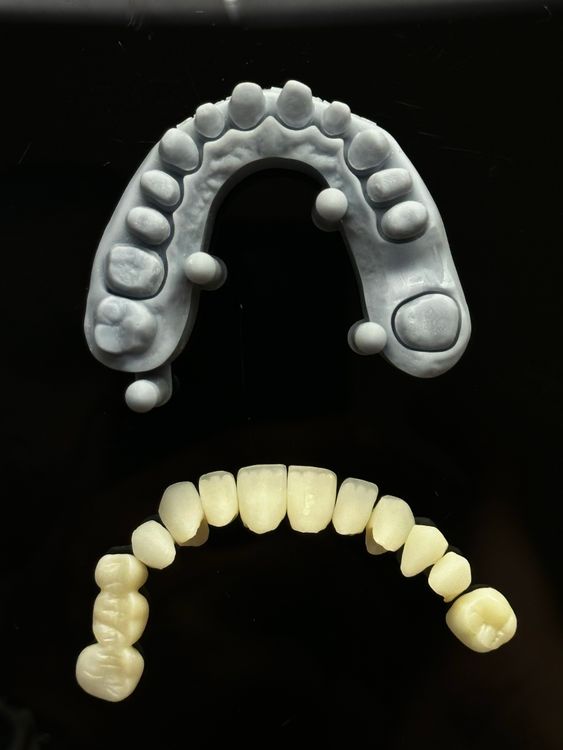
The purpose of a dental crown is not to make a weak tooth “new” again. A crown is a protective restoration that changes how biting forces are distributed across a tooth that has lost enough structure that a smaller repair may no longer be reliable. It can reinforce weakened cusps, restore shape and contact, protect a root-treated tooth, and make chewing more predictable, but the natural tooth underneath still matters.
If you want the basic procedure, candidacy, appointment steps, and cost factors, our dental crowns page covers those details. This article takes a different angle: what a crown is mechanically trying to accomplish, what it can protect, and what it cannot guarantee.
A Crown Changes How a Damaged Tooth Handles Force
A healthy tooth is built to flex slightly under chewing pressure. Enamel, dentin, cusps, and the surrounding periodontal support work together to spread force. When decay, a large old filling, a fracture, or a root canal removes significant tooth structure, that balance changes.
A remaining cusp may become thin enough to bend or crack. A very large filling can behave like a wedge between weakened walls. A crack may open slightly each time the patient bites. A crown encircles the visible portion of the prepared tooth so chewing pressure is carried through a more unified outer shell rather than concentrated on a vulnerable fragment.
Why Covering the Cusps Can Matter
Back teeth have raised cusps that absorb strong vertical and sideways forces. When one or more cusps are undermined, simply replacing the missing center with another filling may leave those outer walls exposed to repeated flexing.
Cuspal coverage is one reason dentists sometimes recommend a crown or other indirect restoration even when the tooth is not currently painful. The goal is not to treat pain; it is to reduce the risk that the weakened part fractures under normal function.
A Crown Protects a Tooth, but It Does Not Heal a Crack
A crack in enamel or dentin does not biologically knit back together like a broken bone. A crown can surround and stabilize many cracked teeth so the crack is less likely to flex during chewing, but the existing crack still exists underneath.
That is why prognosis depends on where the crack extends. A crack confined to the crown portion of the tooth may be manageable. A fracture extending deeply below the gumline or through the root can make the tooth much harder, or impossible, to save.
If a tooth has sharp pain on biting or release, spontaneous aching, or a history of a large restoration, prompt evaluation is more useful than waiting to see whether the crack becomes visible.
Why Root-Treated Back Teeth Often Need More Protection
A root canal removes infected or inflamed tissue from inside the tooth, but it does not make the tooth indestructible. The tooth may already have lost substantial structure from decay, previous fillings, or the access opening needed to reach the canals.
Molars and premolars continue to absorb heavy chewing forces after treatment. For many back teeth, full or partial cuspal coverage helps protect the remaining structure after root canal treatment.
The crown protects the tooth from mechanical fracture; the root canal treats disease inside the tooth. They solve different problems.
A Crown Can Restore Contact With Neighboring Teeth
Teeth are not isolated objects. Their shape affects how food moves through the mouth, where neighboring teeth contact, and how the upper and lower teeth meet.
A properly designed crown can rebuild a broken contact point so food is less likely to pack between teeth. It can restore the correct height and contour of a worn tooth and help the bite contact in a more stable way.
Poor contour or an incorrect bite can cause its own problems, which is why crown fit is evaluated from several directions, not just by whether the restoration looks good.
A Crown Does Not Make the Tooth Immune to Decay
The crown material itself cannot develop a cavity, but the natural tooth at the crown margin still can. Plaque can collect where the restoration meets enamel or root surface, especially if gums recede or home cleaning is difficult.
Decay at a crown margin can progress under the restoration before it becomes obvious. Brushing, cleaning between teeth, fluoride exposure, and regular examinations still matter just as much after a crown is placed.
A Crown Does Not Guarantee the Nerve Will Stay Healthy
Some crowned teeth have healthy pulps and never need a root canal. Others have experienced deep decay, cracks, trauma, or repeated restorative procedures that place the pulp under significant stress.
A tooth can occasionally develop irreversible pulp inflammation after crown preparation even when the procedure was performed appropriately. Persistent spontaneous pain, lingering temperature sensitivity, swelling, or a new abscess should be evaluated rather than assumed to be normal crown sensitivity.
A Crown Cannot Correct Every Kind of Fracture
If a fracture extends too far below the gumline, divides the root, or leaves too little sound tooth structure for predictable restoration, a crown may not be enough. In those situations, the dentist may discuss additional procedures or replacement of the tooth.
The important question is not simply “Can a crown be put on it?” It is “Is there enough healthy, accessible tooth and root support for the crown to have a reasonable long-term prognosis?”
Why Another Large Filling Is Sometimes the Wrong Tradeoff
A filling is more conservative when enough healthy tooth remains to support it. That is usually preferable to removing extra tooth for a crown. But as the restoration becomes larger, the remaining natural walls become thinner and more vulnerable.
At some point, choosing another oversized filling may preserve more tooth on the day of treatment but expose the remaining cusps to greater fracture risk afterward. The decision is based on the pattern of damage, not a fixed percentage of tooth loss.
Our article Choosing the Dental Filling Option That’s Best for You explains how restoration size, bite force, moisture control, and remaining structure influence that choice.
Crown vs. Onlay: Both Can Provide Cuspal Coverage
Not every weakened tooth needs full circumferential coverage. In selected cases, an onlay or partial-coverage restoration can reinforce one or more cusps while preserving more untouched enamel.
Whether partial or full coverage is appropriate depends on the crack pattern, amount of remaining enamel, existing restorations, bite, isolation, and restorative material. The best option is the one that provides enough protection without removing more healthy tooth than necessary.
Grinding Can Shorten the Life of Both the Crown and the Tooth
A strong crown can still be overloaded. Patients who clench or grind may fracture porcelain, loosen restorations, wear opposing teeth, or stress the tooth and supporting tissues.
When the bite shows heavy wear or repeated restoration failure, protecting the crown may also require addressing the force placed on it. That may involve habit changes, bite evaluation, or a nightguard when clinically appropriate.
The Tooth Under the Crown Still Needs a Healthy Foundation
Long-term success depends on more than the crown material. Gum health, root support, bone level, oral hygiene, remaining tooth structure, bite forces, and the quality of the bond or cement all affect prognosis.
A beautifully made crown cannot compensate for uncontrolled decay, severe periodontal bone loss, or a non-restorable root fracture. Diagnosis comes before fabrication.
When a Crown Fails, the Reason Matters
A crown can fail because the restoration chips, the cement loses retention, decay develops at the margin, the underlying tooth fractures, the nerve becomes infected, or periodontal support changes. Each problem requires a different solution.
Sometimes the crown can be repaired or replaced. Sometimes the tooth needs root canal treatment. In more advanced structural failures, the tooth may no longer be restorable.
What a Good Crown Is Supposed to Accomplish
- Redistribute chewing forces around weakened tooth structure.
- Protect vulnerable cusps from further flexing and fracture.
- Restore the tooth’s height, contour, and contact with neighbors.
- Support comfortable chewing and a stable bite.
- Protect a strategically important tooth after substantial structural loss.
- Create a cleansable, well-fitting margin that can be maintained over time.
The Purpose Is Protection, Not Invincibility
A dental crown is valuable because it can give a compromised tooth a more protective outer structure and a better chance of functioning for years. It does not erase the tooth’s history or eliminate future maintenance.
The most conservative treatment is not always the smallest restoration, and the strongest treatment is not always the largest. The right choice protects the remaining tooth while preserving as much healthy structure as the situation allows.
People Ask
 Dr. Roy Burkhalter, DDS


.svg)