



.svg)

.svg)
Contents
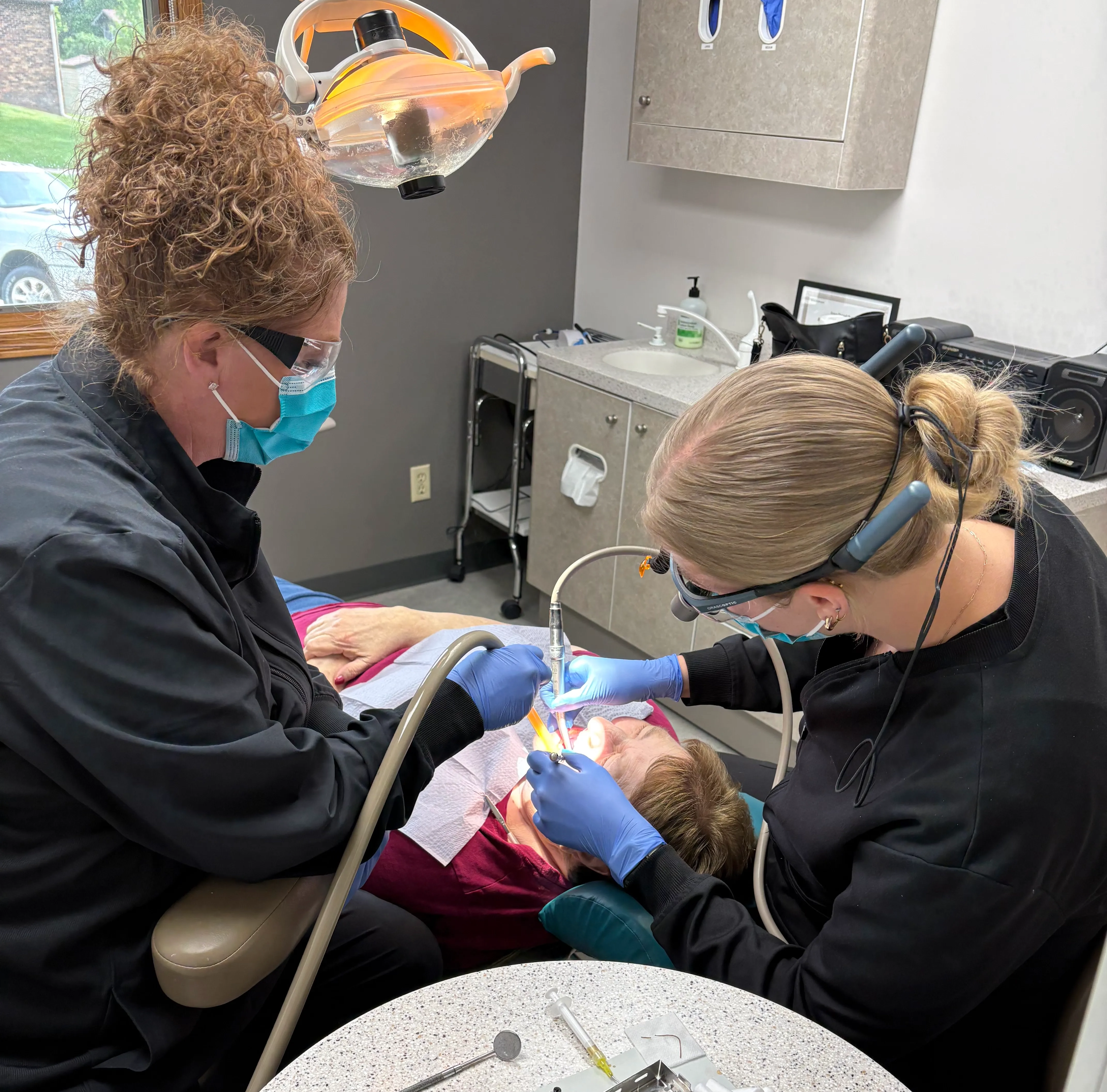
Choosing the dental filling option that’s best for you depends on much more than color. The location and size of the cavity, how strongly you bite, whether the area can be kept dry, the amount of healthy tooth remaining, your medical history, appearance goals, expected longevity, and cost can all influence the recommendation.
A filling restores tooth structure lost to decay or a small fracture. The dentist removes diseased tissue, prepares the area, and places a material that seals and rebuilds the tooth. At Markham Family Dental Associates, the decision begins with a dental exam in Harlan, IA and, when needed, digital X-rays. A material that works well for one tooth may not be appropriate for another.
What a Dental Filling Is Designed to Do
A filling should close the space created by decay, restore a usable shape, support comfortable chewing, and help protect the remaining tooth. It must withstand moisture, temperature changes, bacteria, and repeated bite forces. No filling is permanent, and every restored tooth still needs brushing, cleaning between the teeth, and professional monitoring.
Very early enamel demineralization may sometimes be managed with fluoride and risk reduction before a physical hole develops. Once decay has created a cavity, however, the damaged area usually needs restorative treatment. Delaying can allow the cavity to grow, weaken the tooth, and approach the pulp.
Our tooth-colored filling service focuses on removing decay conservatively and rebuilding the tooth with a material selected for the clinical situation.
The Main Factors That Guide Material Choice
Before comparing materials, the dentist considers:
- Tooth location: Front teeth and molars face different cosmetic and mechanical demands.
- Cavity size: A small cavity can often be filled directly, while a large loss of structure may need an inlay, onlay, or crown.
- Bite force: Grinding, clenching, and the location of the contact influence fracture risk.
- Moisture control: Some materials need a very dry field to bond predictably.
- Remaining enamel and dentin: The amount and quality of tooth structure affect retention.
- Cavity risk: Dry mouth, diet, hygiene, and previous decay change the long-term outlook.
- Medical considerations: Pregnancy, kidney or neurologic conditions, allergies, age, and other factors may influence material discussions.
- Appearance: A restoration in the smile zone may require careful shade matching.
- Cost and insurance: Benefits vary and do not always determine the best clinical material.
Composite Resin: The Common Tooth-Colored Option
Composite resin is a tooth-colored material made from a resin matrix reinforced with glass or ceramic filler. It is placed in increments and hardened with a curing light. The shade can be matched closely to surrounding enamel, which makes composite useful for front teeth and visible areas.
Composite bonds to prepared tooth structure and can often be placed with conservative preparation. It is used for many small to moderate cavities and can also repair selected chips or worn areas. Our dental bonding page explains related cosmetic uses of composite material.
Advantages of Composite Resin
- Matches natural tooth color
- Bonds to enamel and dentin
- Often allows conservative removal of tooth structure
- Can be shaped and polished during one appointment
- Contains no dental amalgam mercury
Limitations of Composite Resin
Composite placement is technique-sensitive. Saliva or bleeding can interfere with bonding, so isolation is important. Large restorations in heavily loaded molars may wear, chip, or fracture sooner than a more protective indirect restoration. Composite can also stain at the margins over time.
Longevity depends on cavity size, bite, home care, diet, moisture control, material, and placement, not just the label “white filling.” A small, well-maintained composite may last for years, while a very large restoration in a grinding patient faces a different prognosis.
Dental Amalgam: A Durable Silver-Colored Material
Dental amalgam is a mixture of metals that includes elemental mercury bound with an alloy containing silver, copper, and tin. It has been used for many years, especially in back teeth. Amalgam is strong, relatively tolerant of moisture during placement, and often less expensive than some alternatives.
Its main cosmetic limitation is the silver-gray appearance. Placing amalgam also generally requires a preparation shape that mechanically retains the material rather than bonding it to the tooth.
Current FDA Considerations
The U.S. Food and Drug Administration recommends that certain higher-risk groups avoid new amalgam fillings when possible and clinically appropriate. Those groups include people who are pregnant or planning pregnancy, nursing, children, especially younger children, people with kidney dysfunction or neurologic impairment, and people with known sensitivity to amalgam components. The final choice should be discussed with the dentist and relevant medical professional.
The FDA does not recommend removing an intact amalgam filling solely to prevent a disease when there is no decay or medical reason for removal. Taking out a sound filling removes additional healthy tooth structure and temporarily increases mercury-vapor exposure during the procedure. Replacement is considered when the filling or tooth is failing, decay is present, a medical indication exists, or another clinical reason justifies treatment.
Glass Ionomer and Resin-Modified Glass Ionomer
Glass ionomer materials are tooth-colored and can chemically interact with tooth structure. They release fluoride over time and may be useful for small restorations, root-surface cavities, areas where moisture control is difficult, temporary or transitional treatment, and selected pediatric situations.
Traditional glass ionomer is generally not as strong or wear-resistant as composite or amalgam in a large, heavily loaded chewing surface. Resin-modified versions add resin components to improve handling and strength, but material selection still depends on the location and size of the restoration.
These materials can be especially useful when the goal is a conservative restoration in a lower-stress area. They are not automatically the best choice for every cavity simply because they release fluoride.
Ceramic and Gold Inlays or Onlays
When damage is too extensive for a direct filling but does not require a full crown, an inlay or onlay may be considered. These restorations are fabricated outside the mouth or with digital in-office technology and then bonded or cemented to the prepared tooth.
Ceramic can closely match natural enamel and resist staining. Gold has a long history of durability and favorable wear characteristics, although its color and cost affect patient preference. Indirect restorations usually require more laboratory or digital design steps and cost more than a direct filling.
Markham uses in-house scanning and CAD/CAM capabilities for selected restorative cases. The choice between a filling, onlay, and dental crown depends on how much tooth structure remains and where the cracks or weakened cusps are located.
When a Crown Is Better Than a Filling
A filling replaces a limited area. If a tooth has a very large cavity, multiple cracks, a failing oversized restoration, substantial wear, or root canal treatment, a filling may not provide enough coverage. A crown surrounds and protects more of the remaining tooth.
Choosing a larger filling simply because it is less expensive today can be false economy when the remaining cusps are likely to fracture. On the other hand, a crown removes more tooth structure than a small filling and should not be recommended when a conservative restoration is sufficient.
The dentist should explain why the proposed restoration matches the amount of damage and what alternatives exist.
Front Teeth and Back Teeth Have Different Needs
Front teeth are highly visible and experience cutting and shearing forces. Composite resin is commonly used for small cavities, chips, and defects because it can be shade-matched and sculpted. Larger cosmetic or structural concerns may lead to a discussion of veneers or crowns.
Back teeth carry stronger chewing loads. Composite, amalgam, glass ionomer, ceramic, gold, or a crown may be appropriate depending on the cavity. The fact that a material is tooth-colored does not by itself make it stronger, safer, or more conservative.
Fillings for Children and Teenagers
Material choice in children depends on the tooth, cavity, cooperation, moisture control, expected lifespan of a baby tooth, and cavity risk. A small cavity in a primary tooth may be treated differently from a large cavity in a newly erupted permanent molar.
Prevention remains important after any filling. Fluoride toothpaste, defined snack times, water between meals, professional fluoride treatment, and dental sealants for eligible grooves can lower the risk of new decay.
What to Expect During a Filling Appointment
The dentist confirms the tooth and treatment, uses local anesthetic when needed, removes decay, shapes and cleans the preparation, places the chosen material, and adjusts the bite. Composite is commonly placed in layers and light-cured. Amalgam is condensed and shaped before hardening. Other materials follow different protocols.
After treatment, numbness may last for several hours. Avoid chewing until normal sensation returns so you do not bite your lip or cheek. Mild temperature sensitivity may occur temporarily, but the trend should be toward improvement.
When to Call After a Filling
Contact the office if the bite feels high, pain worsens, the tooth hurts when pressure is released, sensitivity lingers for a long time, swelling develops, or the filling feels loose or broken. A high spot can concentrate force and may need a simple adjustment.
Strong spontaneous pain, nighttime pain, or swelling may indicate that the pulp was more inflamed than expected. If the nerve cannot recover, root canal treatment may be necessary. This is determined through symptoms and testing, not from the filling material alone.
How Long Do Fillings Last?
No material has one guaranteed lifespan. Size, location, bite force, grinding, moisture during placement, oral hygiene, sugar frequency, dry mouth, and professional maintenance all matter. A small restoration in a low-risk patient may last much longer than a large restoration in a heavily loaded tooth.
Do not replace a filling merely because it is old. At each exam, the dentist checks the margins, surrounding tooth, bite, cracks, and X-rays when indicated. Replacement is recommended when there is a clinical reason, such as recurrent decay, fracture, open margins, or structural risk.
Questions to Ask Before Choosing a Filling
- How large and deep is the cavity?
- Why is this material suitable for this tooth?
- Can the area be kept dry enough for reliable bonding?
- Would an onlay or crown protect the tooth better?
- How will the restoration look?
- What maintenance and sensitivity should I expect?
- Are there medical or allergy considerations?
- What does my estimate include?
Our insurance and financing page explains benefits verification and payment options, but the clinical recommendation should be based on the tooth rather than insurance terminology alone.
The Best Filling Is the One Matched to the Tooth
Choosing the dental filling option that’s best for you requires a personalized decision. Composite offers natural color and bonding, amalgam remains durable in selected situations, glass ionomer has useful fluoride-releasing and moisture-tolerant properties, and indirect ceramic or gold restorations can rebuild larger areas. Sometimes a crown is more protective than another filling.
To evaluate a cavity or failing restoration with the Markham Family Dental Associates team, request an appointment or call (712) 755-5342.
People Ask
 Dr. Roy Burkhalter, DDS


.svg)