



.svg)
.svg)
Contents
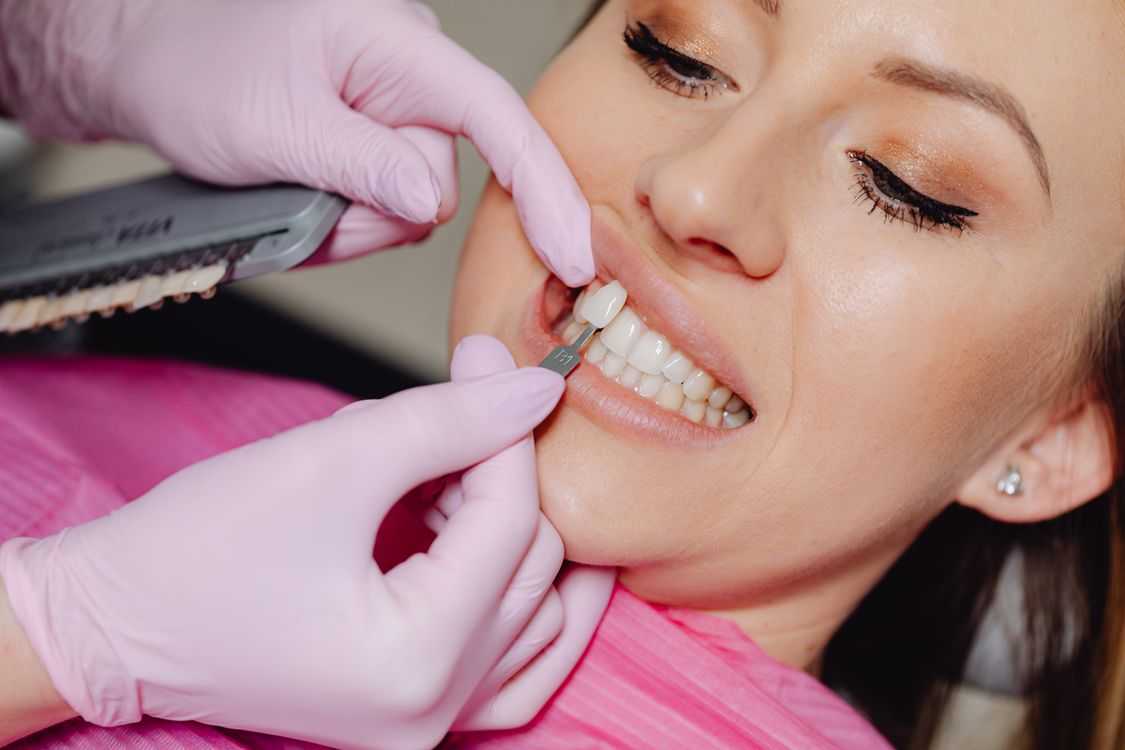
Dental veneers can create a major cosmetic change, but the most important question is not “Do veneers look good?” It is “What am I committing to if I choose them?” Porcelain veneers can improve shape, color, spacing, and symmetry, but they are different from whitening or bonding because tooth preparation is usually irreversible.
This article focuses on the decision before treatment: what veneers can and cannot solve, when more conservative options deserve consideration first, and what long-term maintenance means. For the actual treatment process, cost range, and candidacy details at Markham Family Dental, see our porcelain veneers service page.
Veneers Are a Long-Term Restorative Commitment
Most porcelain veneers require removal of a small amount of enamel so the ceramic can fit naturally and avoid looking bulky. That enamel does not grow back.
Once a tooth is prepared, it will generally need a veneer or another restoration in the future. That does not make veneers a bad treatment; it means the decision should be made with a long-term view rather than as a temporary cosmetic experiment.
Ask What Problem You Are Trying to Solve
Veneers are most useful when several cosmetic issues overlap, such as discoloration, worn edges, shape differences, small gaps, or minor positional irregularities.
If the only concern is tooth color, whitening may be more conservative. If the issue is one small chip, bonding may be enough. If the main concern is crowding, orthodontics may address the cause rather than masking tooth position.
Whitening Should Often Come First
If you are considering veneers on only some visible teeth, whitening the natural teeth first can establish the shade you want before porcelain is matched.
Whitening after veneers are placed will not change the porcelain shade. Planning the sequence helps avoid future color mismatch.
Bonding May Be Better for a Small Problem
Composite bonding can repair chips, reshape small areas, and close minor gaps with little or no enamel removal. It usually costs less and can often be repaired directly.
The tradeoff is that composite is more prone to staining and wear than porcelain. For one small defect, though, dental bonding may be the more conservative first step.
Orthodontics May Be Better for a Position Problem
Veneers can visually mask slight rotations or gaps, but they do not actually move teeth or correct a bite. If significant crowding, spacing, or bite problems are present, orthodontic treatment may create a healthier foundation before any cosmetic refinement.
That may involve clear aligners or braces depending on the case.
Veneers Do Not Make a Tooth Stronger in Every Situation
A veneer covers primarily the front surface of a tooth. If a tooth is heavily filled, fractured, root-treated, or structurally weak, a crown may be the more appropriate restoration because it provides broader coverage.
Cosmetic appearance should not override structural needs.
Gum Health Matters Before Veneers
Bleeding, swollen, or unstable gums can compromise the appearance and longevity of veneer margins. The final ceramic edge needs a healthy, stable gumline.
Active periodontal disease should be controlled before elective cosmetic treatment begins.
Grinding Can Shorten Veneer Lifespan
Clenching and grinding place repeated force on front teeth and can chip porcelain or stress the bond. Patients with bruxism may need a night guard after treatment.
If you already have worn front teeth, determining why they wore down is important before simply rebuilding the shape.
How Many Veneers Do You Actually Need?
More is not automatically better. Some patients need one or two veneers to correct isolated teeth; others need several to create consistent shape and color across the smile line.
The correct number depends on how many teeth show when you smile, symmetry, existing restorations, tooth color, and the changes you want.
Natural-Looking Veneers Are About Proportion, Not Maximum Whiteness
The most natural results consider tooth width, length, translucency, surface texture, gumline, lip position, and facial features. Very bright or overly uniform teeth can look artificial even when the porcelain itself is technically excellent.
A good cosmetic plan aims for harmony rather than the whitest possible shade.
Veneers Will Eventually Need Maintenance or Replacement
Porcelain veneers can last many years, but they are not lifetime devices. Chipping, gum recession, changes in bite, wear, decay at margins, or simple material aging can eventually require repair or replacement.
That future maintenance should be part of the original decision, especially for younger patients who may have decades of restorative care ahead.
Questions to Ask Before Saying Yes to Veneers
- Could whitening solve the concern with less treatment?
- Could bonding correct it without enamel removal?
- Would orthodontics improve the tooth position first?
- How much enamel needs to be removed?
- How many teeth really need treatment?
- What happens if a veneer chips or fails?
- Will I need a night guard?
- What maintenance should I expect over the next 10 to 20 years?
When Veneers Make the Most Sense
Veneers are often a strong choice when the teeth are healthy enough for conservative preparation and the patient wants to address several visible concerns at once with a durable, stain-resistant material.
They become less attractive when a simpler treatment can solve the problem just as well.
Start With the Least Invasive Option That Meets the Goal
A good cosmetic plan is not about choosing the most dramatic treatment. It is about choosing the least invasive treatment that can predictably create the result you want.
For some patients that means whitening. For others it is bonding, orthodontics, or a combination. Veneers are most valuable when they solve a problem those simpler options cannot solve as predictably.
People Ask
 Dr. Roy Burkhalter, DDS


.svg)