



.svg)
.svg)
Contents
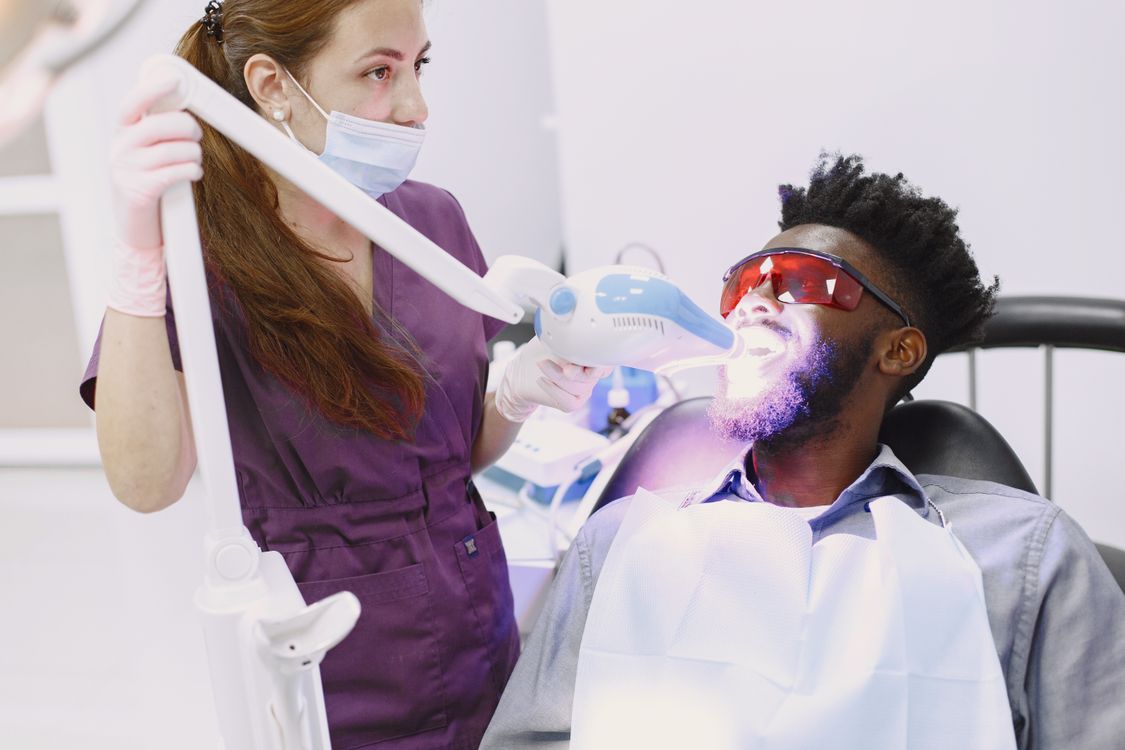
Mall whitening: why you shouldn’t treat it like a simple beauty service comes down to one basic issue: tooth whitening may look cosmetic, but the material is being placed on living teeth and next to gum tissue. The safest starting point is knowing whether the discoloration is actually a stain, whether the teeth are healthy enough to bleach, and whether any crowns, fillings, cracks, exposed roots, or gum problems will change the result.
This does not mean every over-the-counter product is unsafe or that whitening must always happen in a dental chair. It means a kiosk, salon, or other non-dental setting may not be designed to diagnose the conditions that can make bleaching painful, ineffective, or uneven.
If your goal is a brighter smile, our professional teeth whitening page explains the treatment options available at Markham Family Dental. This article focuses on why the screening and treatment plan matter as much as the whitening gel itself.
Whitening Is Simple Only When the Diagnosis Is Simple
Many people assume yellow teeth equal surface stains. Sometimes that is true. Coffee, tea, tobacco, and everyday pigments can darken enamel over time. But color changes can also come from a dead or injured tooth, old fillings, enamel defects, exposed roots, internal medication-related staining, plaque and tartar, or decay.
Those conditions do not all respond to bleaching in the same way. Whitening one dark tooth that actually needs a root canal, for example, would not solve the underlying problem. Bleaching around a visible crown may brighten the neighboring natural teeth while leaving the crown unchanged, creating a stronger mismatch.
1. A Non-Dental Whitening Setting May Not Diagnose Decay or Cracks
Peroxide-based whitening products can temporarily increase sensitivity even in healthy teeth. If a tooth has an untreated cavity, crack, worn enamel, or exposed root, the discomfort can be much stronger.
A whitening provider who is not performing a dental examination may not be able to determine why a tooth is sensitive or whether the enamel and gums are healthy enough for bleaching. A dental exam gives you that information before cosmetic treatment begins.
2. Gum Irritation Is Not Just an Inconvenience
Whitening gel that sits on the gums can cause temporary chemical irritation. Custom trays and professional isolation techniques are designed to reduce unnecessary contact with soft tissue.
If a generic tray or barrier fits poorly, gel can spread beyond the teeth. More gel is not better. Higher exposure can increase sensitivity and gum irritation without guaranteeing a better shade change.
3. Existing Dental Work Will Not Whiten
Crowns, veneers, tooth-colored fillings, bonding, and implant crowns do not bleach like natural enamel. That becomes especially important when the dental work is visible in the front of the smile.
Sometimes the right sequence is to whiten natural teeth first, let the shade stabilize, and then replace an old visible restoration so it matches. Without planning, a person can end up with white natural teeth beside a darker filling or crown that suddenly looks much more noticeable.
4. Not Every Stain Responds Well to Bleaching
Yellow-toned natural teeth often respond more predictably than gray or deeply internally discolored teeth. Trauma, developmental enamel changes, and certain medication-related discolorations can produce results that are less predictable.
A dentist can help determine whether whitening is likely to work or whether bonding, veneers, or another option would be a better use of your time and money.
5. Sensitivity Should Change the Plan
If you already have sensitive teeth, bleaching is not automatically off the table. The treatment may simply need a lower concentration, shorter wear time, fewer applications, or a desensitizing strategy.
A one-size-fits-all schedule does not account for exposed roots, recession, previous whitening sensitivity, cracked teeth, or enamel wear. Those differences matter more than the brand name on the package.
6. “Professional Strength” Is a Marketing Phrase, Not a Diagnosis
A whitening product can be strong and still be the wrong treatment for a particular mouth. Concentration, contact time, tray fit, isolation, stain type, and tooth condition all affect both results and side effects.
The most useful question is not “How strong is the gel?” It is “Is this product appropriate for my teeth, and how should I use it safely?”
7. Whitening Should Not Be Used to Hide a Dental Problem
A dark tooth after an injury, a new brown area, a white spot that has changed, or discoloration associated with pain should be evaluated before bleaching. Cosmetic treatment should not delay diagnosis of decay, pulp damage, or another dental condition.
Likewise, if the gums are bleeding or swollen, stabilizing gum health first can make whitening more comfortable and give a more even-looking result along the gumline.
8. Kiosk Whitening Can Create False Expectations
Whitening does not make every smile uniformly bright. Teeth naturally vary in shade, canines are often slightly darker than front teeth, and restorations stay the same color. Some internal stains improve only modestly.
A realistic whitening conversation includes what will not change. That is often more valuable than a promise about how many shades lighter the teeth might become.
What About Store-Bought Whitening?
Over-the-counter whitening strips and gels can be reasonable for some adults when used exactly as directed. The key difference is that reputable consumer products have instructions, known active ingredients, and in some cases the ADA Seal of Acceptance.
Our article How Do OTC Whitening Treatments Compare to In-Office Whitening? breaks down the tradeoffs in speed, cost, fit, sensitivity, and predictability.
Questions to Ask Before Any Whitening Treatment
- Are my teeth and gums healthy enough to whiten?
- What type of stain do I have?
- Do I have crowns, veneers, fillings, or bonding that will stay the same shade?
- What should I do if sensitivity develops?
- How long should the product contact my teeth?
- What result is realistic for my natural tooth color?
- Should I have a cleaning first?
Whitening Is Safer When You Know What You Are Treating
The main problem with mall or salon whitening is not that every product used there is automatically dangerous. It is that whitening can be offered without the diagnostic context that tells you whether bleaching is appropriate in the first place.
If your teeth are healthy and the stain is suitable for bleaching, you may have several good options. If the discoloration has another cause, the correct answer may be cleaning, restoration, bonding, veneers, or simply leaving a healthy natural shade alone.
For a broader list of safe ways to brighten teeth and avoid damaging DIY methods, read Best Tips to Make Your Teeth Look Whiter.
People Ask
 Dr. Roy Burkhalter, DDS


.svg)